
Surge vs. GitHub Pages
 By SW Habitation
Surge

GitHub Pages
You know when you’ve finished building your website and just want to get it online without dealing with all the techy stuff? That’s where deployment platforms help. They make it super easy to put your site live, just connect your code, click a button, and it’s up and running. No need to worry about servers or complicated setups.
They also take care of the important things like speed, security, and updates in the background. So while they handle the heavy stuff, you can focus on making your website look good and work great. It's simple, right?
What is Surge ?
Surge is a simple, command-line-based deployment platform for static websites. It’s designed for developers who want a fast, no-frills way to publish static sites with a single command. Surge is particularly popular among frontend developers who need quick deployments for prototypes, client demos, or static projects.
Key Features of Surge
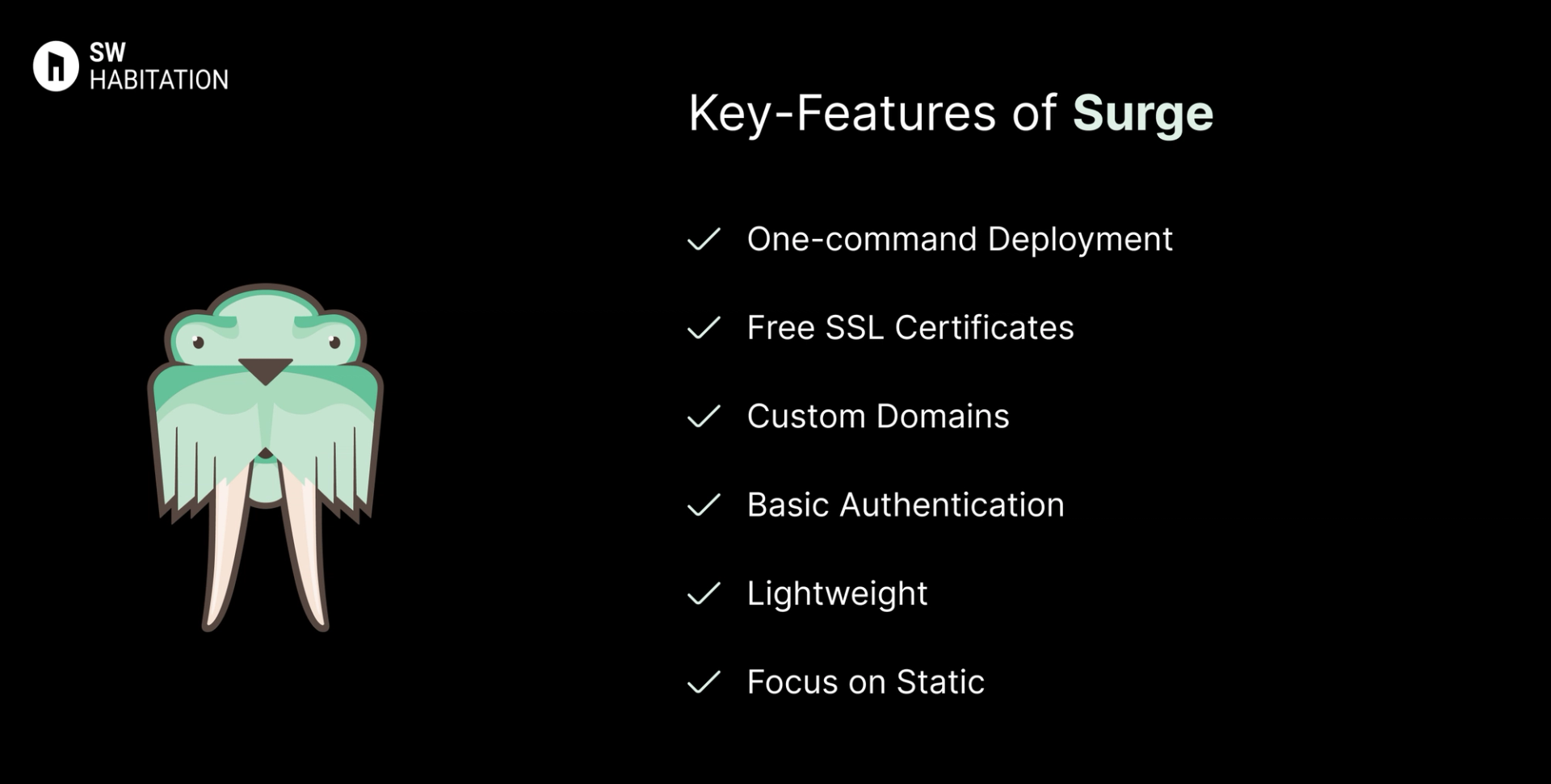
- One-command Deployment: Publish a site using the surge CLI in seconds.
- Free SSL Certificates: Automatic HTTPS on all custom domains.
- Custom Domains: Easily attach your own domain to projects.
- Basic Authentication: Protect your site with password authentication.
- Lightweight: No complex setup or configuration required.
- Focus on Static: Specifically designed for static HTML, CSS, and JavaScript projects.
Advantages of Surge
- Extremely simple CLI workflow (one command deploy).
- Free SSL certificates included.
- Supports custom domains for free.
- Great for quick prototypes and static sites.
- Lightweight and beginner-friendly.
Disadvantages of Surge
- Only supports static sites (no backend, databases, or APIs).
- Lacks advanced features like serverless functions or CI/CD.
- Limited scalability compared to Netlify, Vercel, or Render.
- Documentation and community are smaller than competitors.
What is GitHub Pages ?
GitHub Pages is a static site hosting service directly integrated with GitHub. It allows you to serve static content like HTML, CSS, and JavaScript straight from your GitHub repository. You can automatically deploy sites by pushing code to specific branches, making it a hassle-free option for developers of all levels.
Key Features of GitHub Pages
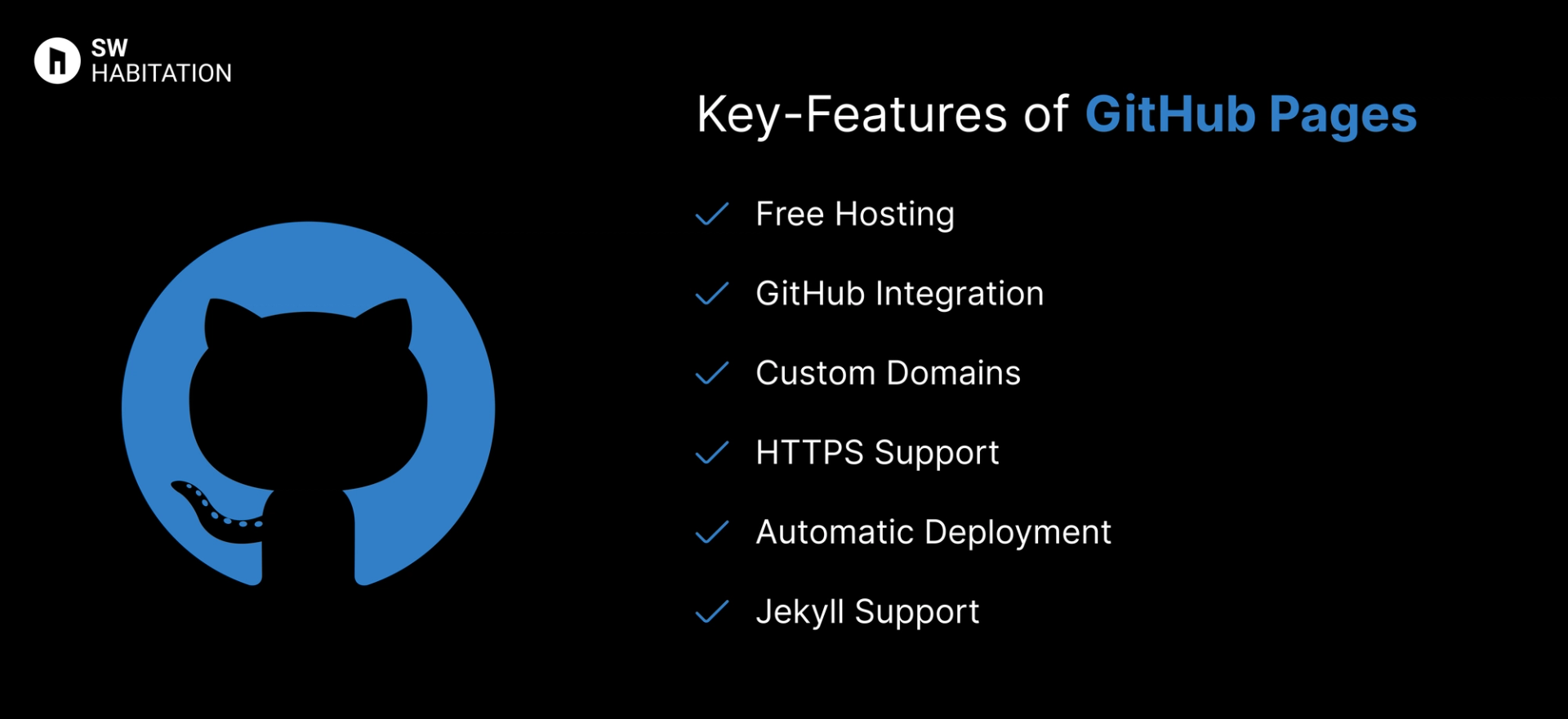
- Jekyll Support: Built-in support for Jekyll static site generator.
- Automatic Deployment: Push to the main branch, and your site is live.
- Free Hosting: No cost, no catch.
- Custom Domains: Use your own domain name.
- HTTPS Support: Free SSL certificates for secure browsing.
- GitHub Integration: Deploy directly from your repository.
Advantages of GitHub Pages
- Great for Open Source: Ideal for documentation and project showcases.
- Custom Domains: Easily configure your own domain.
- Easy Setup: Simple integration with GitHub repositories.
- Automatic Deployment: Deploy directly by pushing changes.
- Free of Charge: No hosting fees, ever.
Disadvantages of GitHub Pages
- No Built-in CI/CD: Limited automation compared to other platforms.
- Static Content Only: No server-side logic or databases.
- Repo Visibility: Free plans require public repositories.
- Limited Customization: Not as feature-rich as other platforms.
Comparison Between Surge vs GitHub Pages
Use Cases of Surge
- Prototypes: Quickly share demos with clients.
- Portfolios: Publish personal sites and resumes.
- Static Sites: Deploy blogs, documentation, or landing pages.
- Educational Projects: Perfect for students learning web dev.
Use Cases of GitHub Pages
- Project Documentation: Ideal for open-source project documentation.
- Learning Projects: Great for practicing web development and deployment.
- Blogs and Static Sites: Pair with static site generators like Jekyll or Hugo.
- Personal Projects and Portfolios: Quick, free hosting for personal websites.
Other Resources
Conclusion
Deployment platforms are a total game changer if you’re looking to launch your website quickly, reliably, and without any trouble. Whether it’s a personal portfolio, a startup site, or a growing business platform, they handle the technical heavy lifting like hosting, security, and scalability so you can stay focused on building great experiences for your users.
You’re not boxed into a single approach. Most platforms integrate smoothly with the tools and frameworks you already love, letting you deploy directly from your Git repository, preview updates, and roll back with ease. With lightning-fast performance and dependable uptime, deployment platforms simplify the path from code to production. Pick the one that aligns with your workflow, and you’re all set to launch with confidence 🚀
Frequently asked questions
Is Surge free to use?
Yes, Surge has a free plan that lets you publish sites with a surge.sh subdomain.
Can I use a custom domain with Surge?
Yes, but custom domain + SSL requires a paid plan.
Does Surge support backend or databases?
No, Surge is only for static websites (HTML, CSS, JS).
How do I deploy a site on Surge?
Install the Surge CLI, run surge in your project folder, and your site is live instantly.
Who is Surge best for?
Developers, students, and freelancers who want a lightweight, fast, static site deployment.
Is GitHub Pages free to use?
Yes, It’s completely free for public repositories, with no hosting fees. You can also host private repositories with GitHub Pro or a paid plan.
What kind of sites can I host on GitHub Pages?
Only static sites like portfolios, blogs, documentation, or landing pages. It doesn’t support server-side code like PHP or Node.js.
Does GitHub Pages support HTTPS?
Yes, It automatically provides HTTPS support, even for custom domains via Let’s Encrypt.