
Next.js vs. RedwoodJS
 By SW Habitation
Next.js

RedwoodJS
So, you know when you want to build a website or app, but doing everything from scratch feels kinda overwhelming? That’s where web frameworks come in. They’re like a ready-made set of tools and building blocks that help you get things up and running way faster. Instead of figuring out every little piece yourself, a framework gives you a solid base to build on, and lets you focus on making something cool.
What is Next.js ?
Next.js is a React-based framework that makes it super easy to build fast and scalable web applications. It gives you the power to choose between Static Site Generation (SSG), Server-Side Rendering (SSR), and even Client-Side Rendering (CSR) all within the same project.
Whether you’re making a personal blog, an e-commerce store, or a complex web app, Next.js simplifies the process while optimizing performance.
Key Features of Next.js
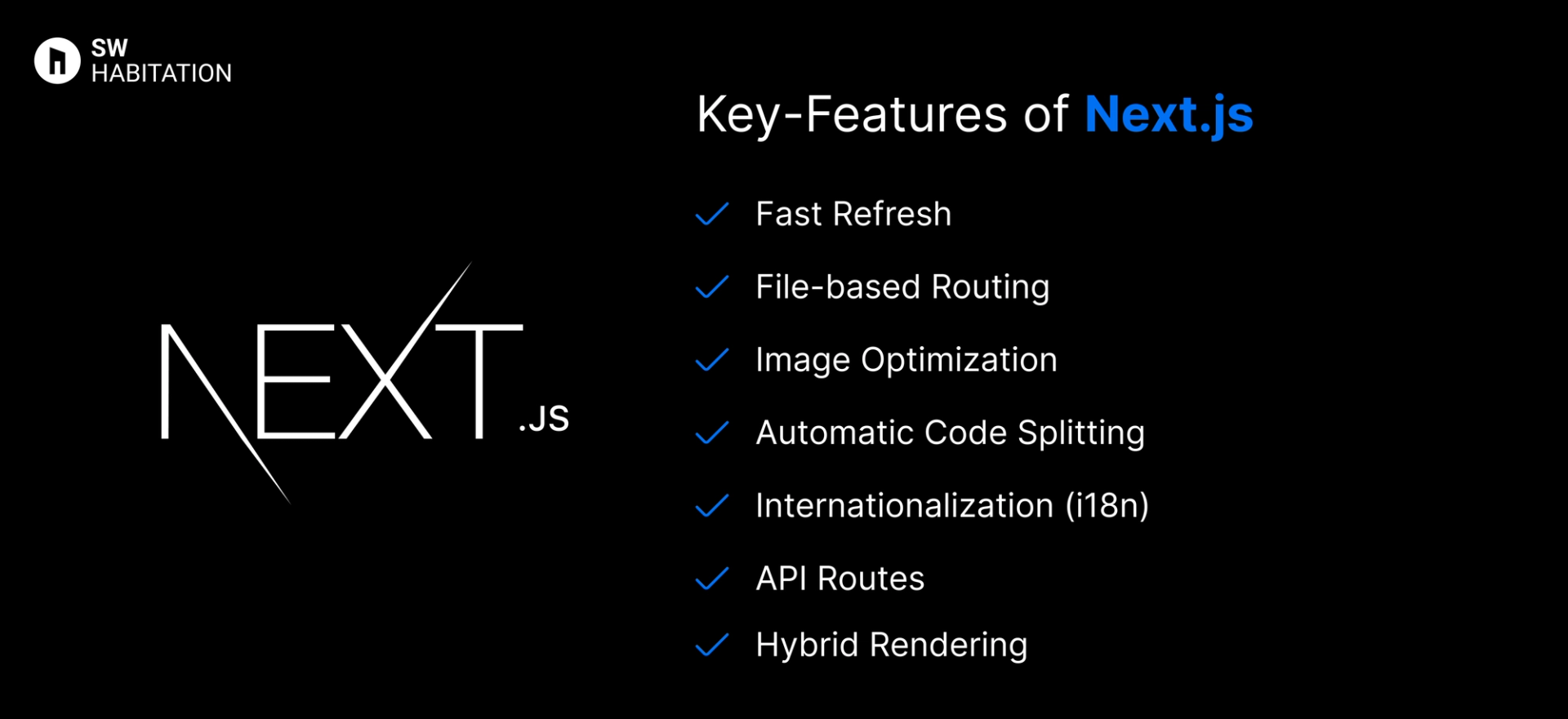
- Fast Refresh: Instant feedback while developing, with live reload.
- File-based Routing: Create pages by simply adding files in the pages directory.
- Image Optimization: Built-in image optimization with the next/image component.
- Automatic Code Splitting: Load only the JavaScript needed for each page.
- Internationalization (i18n): Built-in support for multilingual websites.
- API Routes: Easily create serverless functions without needing a separate backend.
- Hybrid Rendering: Combine SSG and SSR in the same project.
Advantages of Next.js
- Flexibility: Mix and match SSG, SSR, and CSR as needed.
- Performance: Fast out of the box, thanks to automatic code splitting and static generation.
- Easy Deployment: Vercel, the creators of Next.js, offer seamless deployment.
- Active Community: Huge community support with tons of plugins and examples.
- SEO-Friendly: Server-side rendering means better SEO, as search engines can easily crawl the content.
Disadvantages of Next.js
- Learning Curve: It is built on React, concepts like SSR, ISR, and routing may confuse beginners.
- Build Times Can Be Long: Incremental Static Regeneration helps, but large sites may still face slow builds or re-builds.
- Limited Flexibility for Routing: File-based routing is simple but can feel restrictive for complex dynamic routes.
- Server Costs: Server-side rendering and API routes may require backend infrastructure, increasing hosting costs.
- Heavy JavaScript by Default: Without optimization, Next.js apps can ship more JS than needed, affecting performance.
What is RedwoodJS ?
RedwoodJS is a full-stack JavaScript framework. It gives you frontend, backend, GraphQL API, and database in one neat package. Basically, instead of wiring React + Node + GraphQL + Prisma manually, Redwood gives you everything set up out-of-the-box.
Good for startups or devs who wanna ship MVPs fast without thinking too much about architecture.
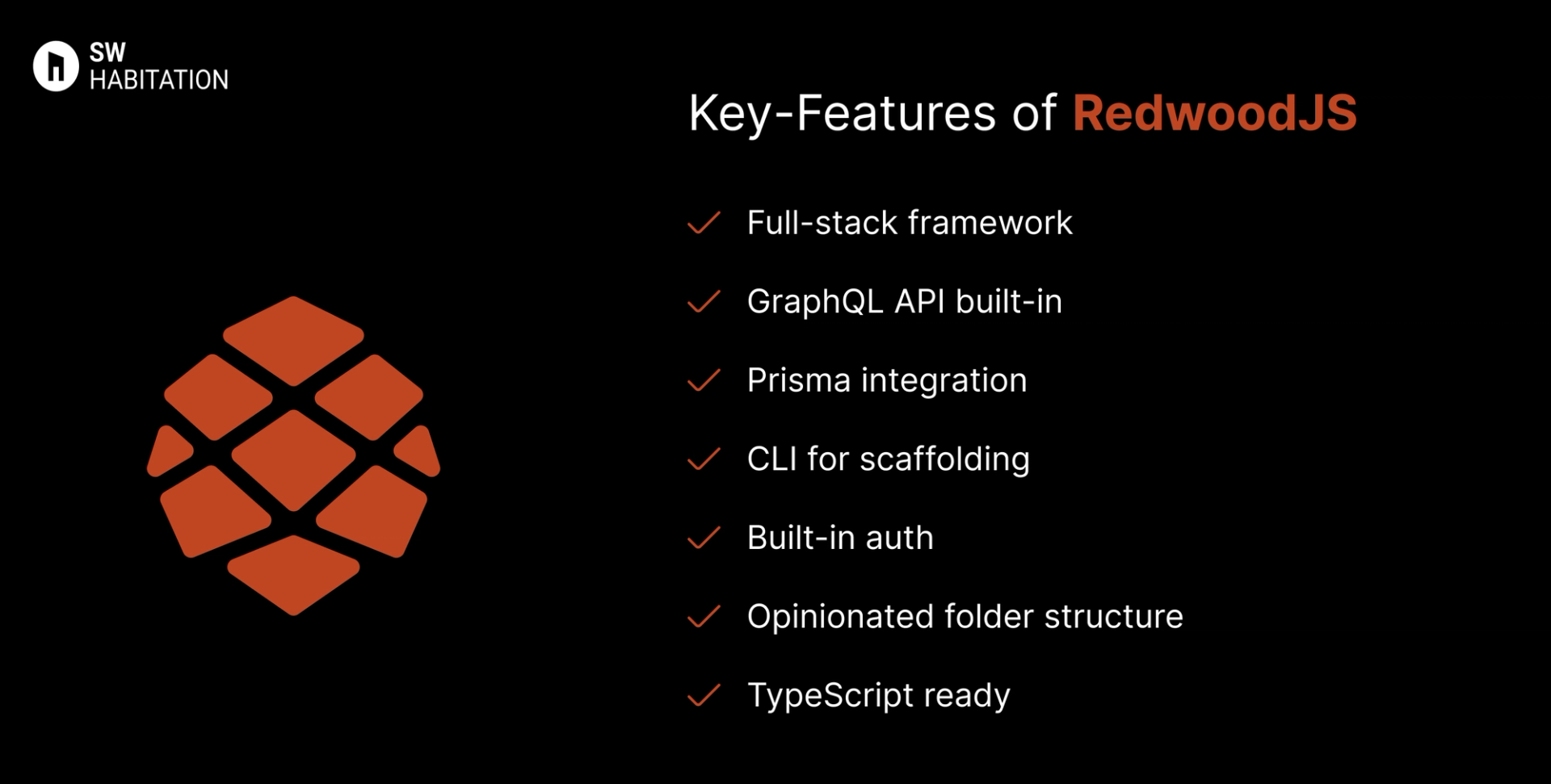
- Full-stack framework: frontend + backend + database all in one repo
- GraphQL API built-in: automatic API scaffolding
- Prisma integration: type-safe DB access, migrations handled
- CLI for scaffolding: create pages, components, services quickly
- Built-in auth: supports Auth0, Supabase, Netlify Identity
- Opinionated folder structure: guides you on how to organize code
- TypeScript ready: strong TS support out of the box
Advantages of RedwoodJS
- Comes with full-stack setup out of the box: frontend, backend, database, deploy all in one.
- Opinionated structure: no guessing “where should I put this file?” – conventions guide you.
- Tight GraphQL integration: faster API work, with auto-generated SDLs and services.
- Database via Prisma: type-safe queries, easy migrations, works with many databases.
- Built-in auth system: supports Auth0, Supabase, dbAuth, Netlify Identity, and more.
- CLI scaffolding: quickly spin up pages, components, services, CRUD.
- Great for startups: ship MVPs fast without stitching tools together.
Disadvantages of RedwoodJS
- Still new: ecosystem is smaller than frameworks like Next.js or Remix.
- Less flexible: opinionated folder structure may feel restrictive.
- GraphQL learning curve: extra work if you haven’t used it before.
- Prisma adds another layer: you need to learn it for database handling.
- Community packages are limited: fewer plugins/extensions compared to bigger frameworks.
- Not much enterprise adoption yet: less battle-tested at huge scale.
- Documentation improving: but can sometimes feel limited or incomplete.
Comparison Between Next.js vs RedwoodJS
Use Cases of Next.js
- eCommerce Storefronts like Shopify : Combines fast performance with API-based product data for rich shopping UIs.
- SaaS Dashboards and Apps: It is perfect for interactive UIs, auth, and real-time features using API routes.
- Hybrid Rendering Blog Platforms: It supports static + dynamic content for blogs with SEO and personalization needs.
- Modern Marketing Websites: Fast, SEO-friendly pages with dynamic content and smooth navigation.
Use Cases of RedwoodJS
- Startups who wanna ship MVPs fast
- SaaS apps with auth, dashboards, subscriptions
- Admin panels & internal tools
- Small to medium apps where frontend + backend + DB in one repo is handy
- Projects that wanna use GraphQL API + React frontend together
Other Resources
Conclusion
Web frameworks make building websites and apps a whole lot easier. Whether you’re working on a personal project or something big for work, they help with the heavy lifting—like routing, design structure, and how everything connects.
With support for things like server-side rendering, optimized performance, and developer-friendly features, these tools let you create faster, smarter, and cleaner websites. Just pick the one that fits your style, and start building something awesome 🚀
Frequently asked questions
Is Next.js good for large websites?
Yes, it's fast, scalable, and production-ready.
Does Next.js support API routes?
Yes, you can build serverless functions in the pages/api/ folder.
Is Next.js frontend-only or fullstack?
It's fullstack, It includes frontend UI and backend API routes.
Is RedwoodJS same as Next.js?
Nope. Next.js is mostly frontend with API routes. Redwood is full-stack (frontend + backend + DB + GraphQL) all bundled.
Can I skip GraphQL?
Not really. Redwood is built around GraphQL. You kinda gotta use it.
Can Redwood be used for enterprise apps?
Yes, but adoption is still small. So ecosystem and support is limited compared to Next.js.
Is Redwood hard to learn?
Depends. If you know React + Prisma + GraphQL → pretty smooth. Otherwise, might feel heavy at first.
Why use RedwoodJS?
If you want everything in one box and don’t wanna spend weeks wiring frontend, backend, DB, API → Redwood is perfect.