
NetlifyCMS vs. Surge
 By SW Habitation
NetlifyCMS

Surge
You know when you’ve finished building your website and just want to get it online without dealing with all the techy stuff? That’s where deployment platforms help. They make it super easy to put your site live, just connect your code, click a button, and it’s up and running. No need to worry about servers or complicated setups.
They also take care of the important things like speed, security, and updates in the background. So while they handle the heavy stuff, you can focus on making your website look good and work great. It's simple, right?
What is NetlifyCMS ?
NetlifyCMS is an open-source headless CMS built to work with static site generators like Gatsby, Hugo, and Next.js. It gives you a simple web-based UI to manage your content while storing everything directly in your Git repository. This means every change you make is version-controlled, just like your code.
Key Features of NetlifyCMS
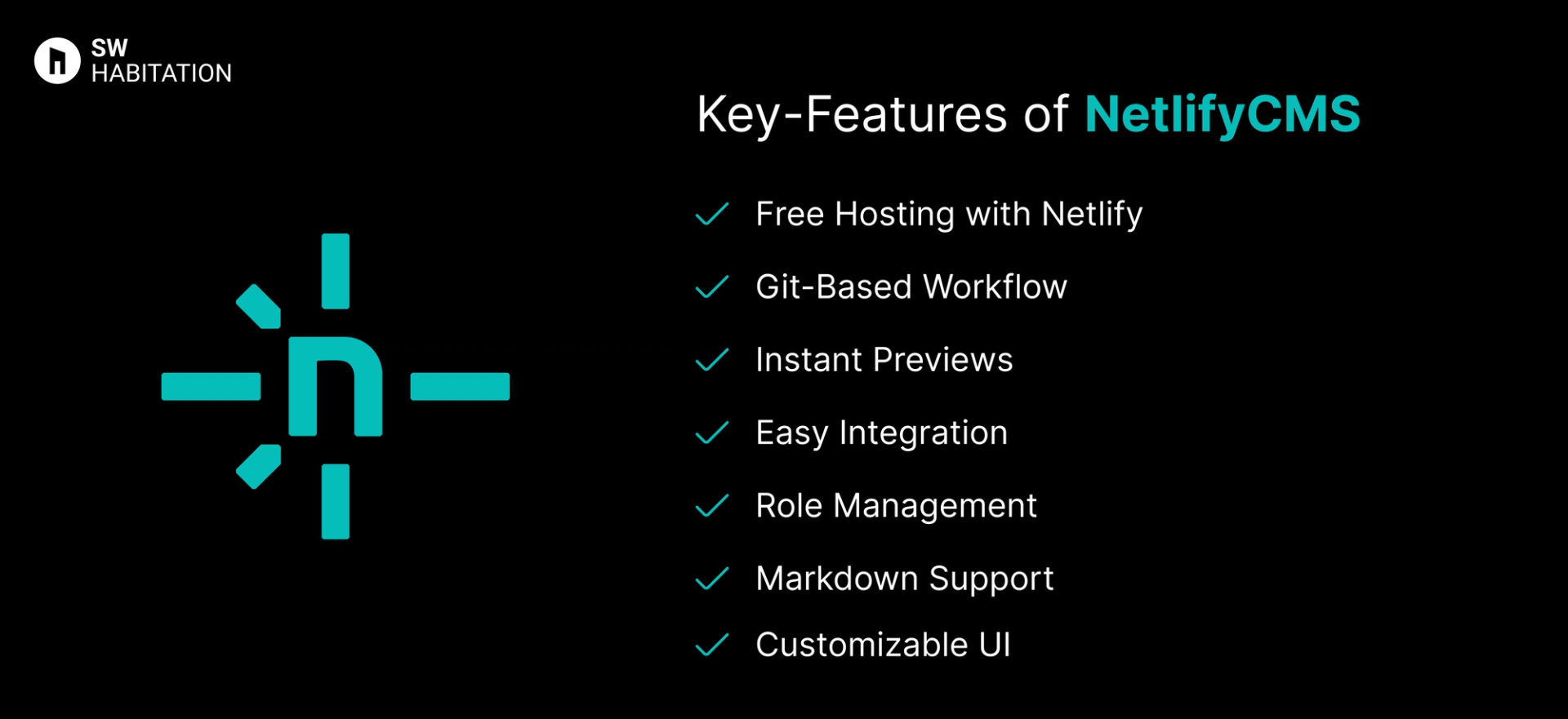
- Free Hosting with Netlify: Deploy instantly with Netlify for free.
- Git-Based Workflow: All content changes are stored as commits in your Git repository.
- Instant Previews: See how your content will look before publishing.
- Easy Integration: Works seamlessly with static site generators like Gatsby, Hugo, and Jekyll.
- Role Management: Assign roles to control who can edit what.
- Markdown Support: Write content in Markdown and preview changes in real time.
- Customizable UI: Tailor the admin interface to fit your content structure.
Advantages of Netlify CMS
- Simple Setup: Easy to integrate with Git and static site generators.
- Free to Use: Open-source and works perfectly with Netlify’s free tier.
- Version Control: Content changes are tracked in Git, ensuring full transparency.
- Fast Deployment: Deploy instantly with Netlify.
- Markdown Support: Write clean, lightweight content with Markdown.
Disadvantages of Netlify CMS
- Not Ideal for Large Projects: Better suited for smaller projects.
- Git Dependency: Requires familiarity with Git workflows.
- Limited Integrations: Fewer built-in integrations compared to larger CMSs.
- No Database: Content is stored as files in Git, not in a traditional database.
What is Surge ?
Surge is a simple, command-line-based deployment platform for static websites. It’s designed for developers who want a fast, no-frills way to publish static sites with a single command. Surge is particularly popular among frontend developers who need quick deployments for prototypes, client demos, or static projects.
Key Features of Surge
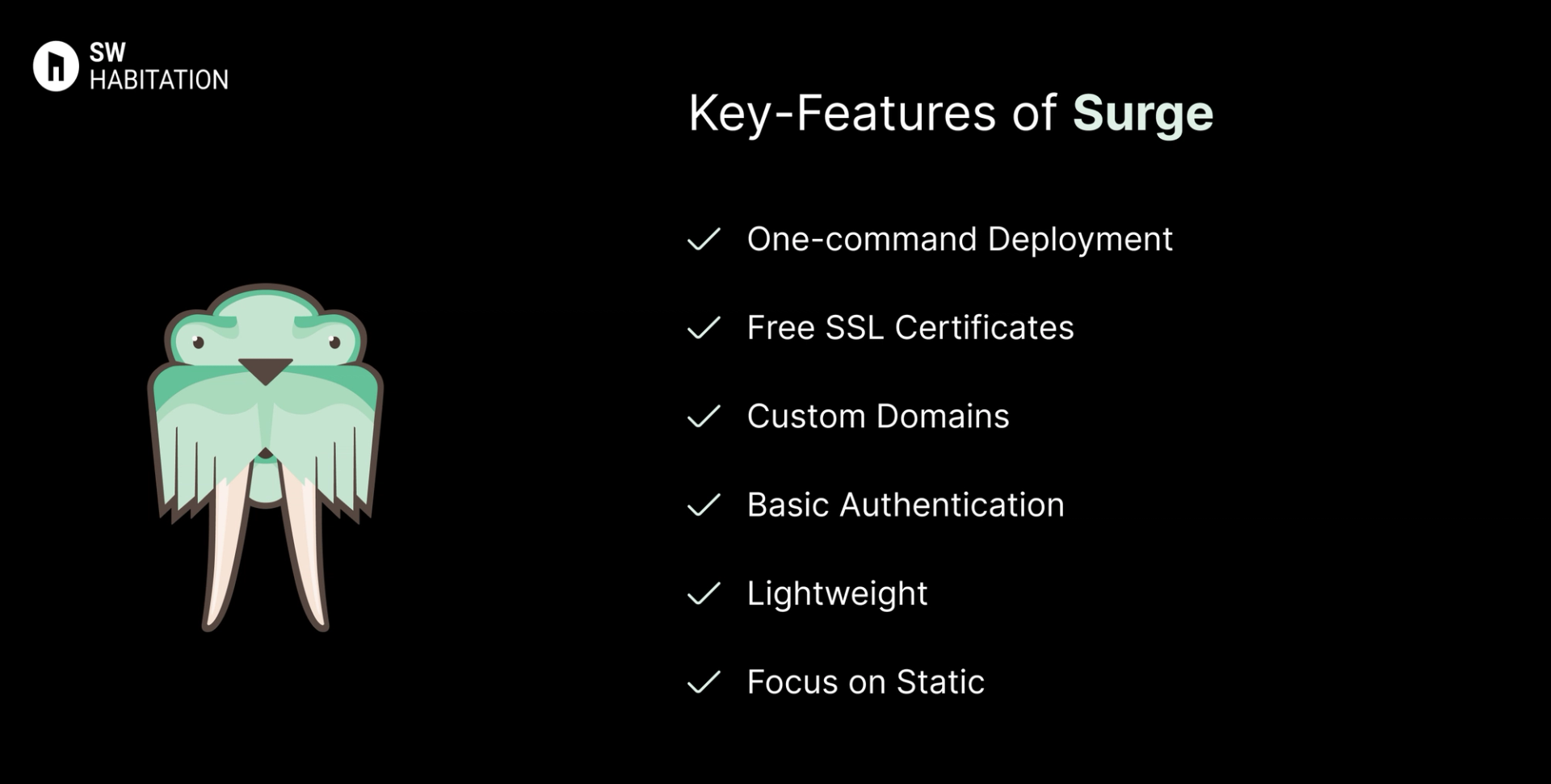
- One-command Deployment: Publish a site using the surge CLI in seconds.
- Free SSL Certificates: Automatic HTTPS on all custom domains.
- Custom Domains: Easily attach your own domain to projects.
- Basic Authentication: Protect your site with password authentication.
- Lightweight: No complex setup or configuration required.
- Focus on Static: Specifically designed for static HTML, CSS, and JavaScript projects.
Advantages of Surge
- Extremely simple CLI workflow (one command deploy).
- Free SSL certificates included.
- Supports custom domains for free.
- Great for quick prototypes and static sites.
- Lightweight and beginner-friendly.
Disadvantages of Surge
- Only supports static sites (no backend, databases, or APIs).
- Lacks advanced features like serverless functions or CI/CD.
- Limited scalability compared to Netlify, Vercel, or Render.
- Documentation and community are smaller than competitors.
Comparison Between NetlifyCMS vs Surge
Use Cases of NetlifyCMS
- Personal Blogs: Simple and fast content management for personal sites.
- Portfolios: Showcase your work with minimal setup.
- Small Business Websites: Perfect for static websites that don’t require complex features.
- Developers Who Love Git: Version control your content the same way you do with code.
Use Cases of Surge
- Prototypes: Quickly share demos with clients.
- Portfolios: Publish personal sites and resumes.
- Static Sites: Deploy blogs, documentation, or landing pages.
- Educational Projects: Perfect for students learning web dev.
Other Resources
Conclusion
Deployment platforms are a total game changer if you’re looking to launch your website quickly, reliably, and without any trouble. Whether it’s a personal portfolio, a startup site, or a growing business platform, they handle the technical heavy lifting like hosting, security, and scalability so you can stay focused on building great experiences for your users.
You’re not boxed into a single approach. Most platforms integrate smoothly with the tools and frameworks you already love, letting you deploy directly from your Git repository, preview updates, and roll back with ease. With lightning-fast performance and dependable uptime, deployment platforms simplify the path from code to production. Pick the one that aligns with your workflow, and you’re all set to launch with confidence 🚀
Frequently asked questions
What is Netlify CMS?
Netlify CMS is an open-source content management system. It is designed for static site generators. It provides a user-friendly interface for editing content stored in Git repositories.
Is hosting on Netlify required?
Nup, While it integrates seamlessly with Netlify, you can use it with any Git-based static site hosted anywhere.
What static site generators are supported?
Netlify CMS supports popular generators like Hugo, Jekyll, Gatsby, Eleventy (11ty), and others.
Is Surge free to use?
Yes, Surge has a free plan that lets you publish sites with a surge.sh subdomain.
Can I use a custom domain with Surge?
Yes, but custom domain + SSL requires a paid plan.
Does Surge support backend or databases?
No, Surge is only for static websites (HTML, CSS, JS).
How do I deploy a site on Surge?
Install the Surge CLI, run surge in your project folder, and your site is live instantly.
Who is Surge best for?
Developers, students, and freelancers who want a lightweight, fast, static site deployment.