
Prismic vs. Cosmic
 By SW Habitation
Prismic

Cosmic
You know, when you wanna make a website or a blog but don’t wanna mess with too much code? That’s where a CMS (Content Management System) comes in. It’s like a super easy tool that helps you add text, pictures, and videos to your site without needing to be a tech genius. You just log in, click a few buttons, and your content is live. It's quite simple, right?
What is Prismic?
Prismic is a cloud-based headless CMS that helps teams manage and deliver content through APIs.
Unlike traditional CMS platforms, Prismic separates content management from presentation, letting developers use front-end frameworks like React, Vue, and Next.js while editors manage content in a simple, user-friendly dashboard.
Its focus is on ease of use, collaboration, and fast setup, which makes it a popular choice for marketing teams, agencies, and businesses that want to build modern websites without heavy infrastructure management.
Key Features of Prismic
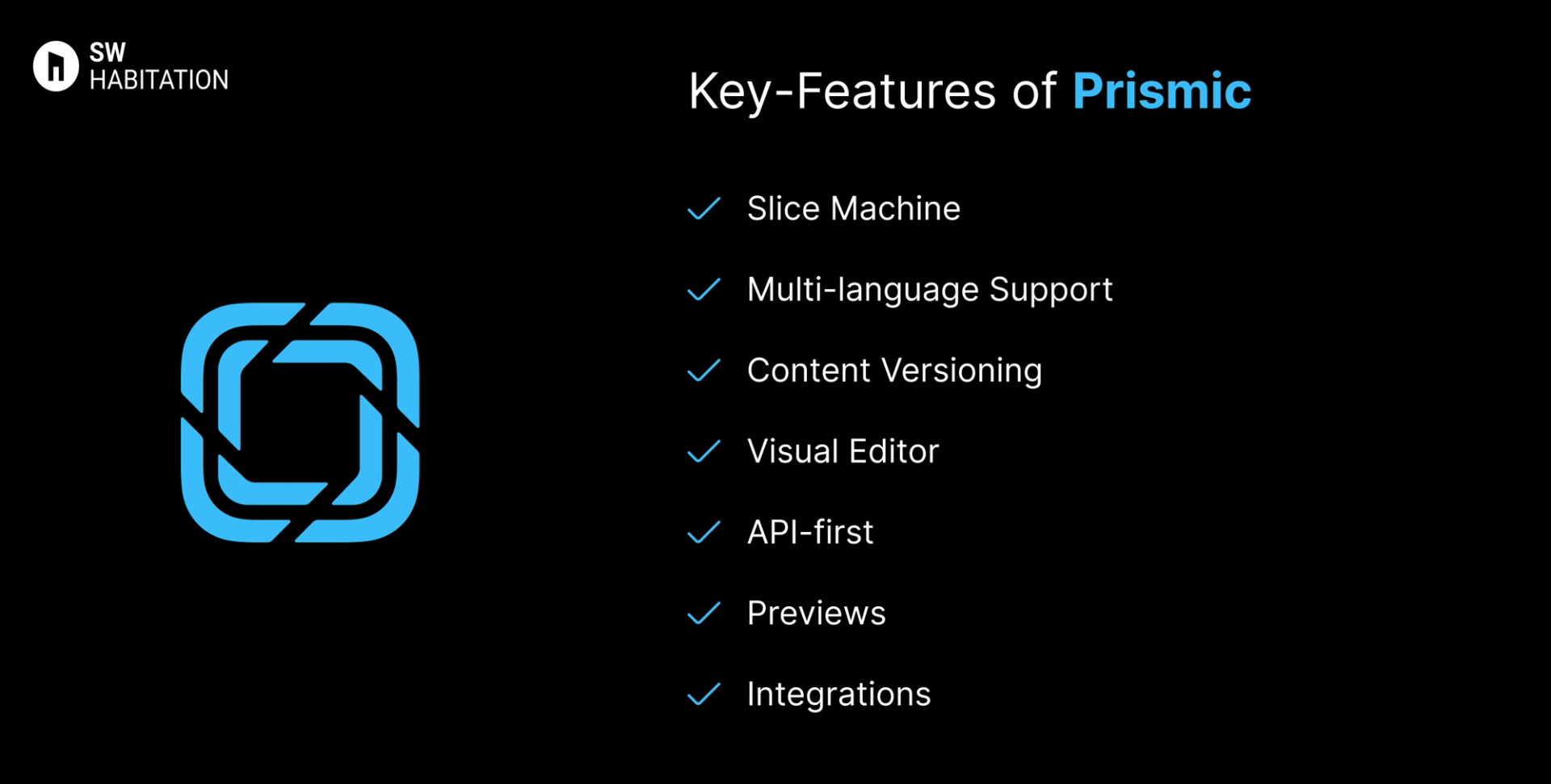
- Slice Machine: Component-based content blocks for flexible page building.
- Multi-language Support: Built-in localization features.
- Content Versioning: Track, preview, and roll back content changes.
- Visual Editor: User-friendly interface for non-technical editors.
- API-first: Delivers content via REST or GraphQL APIs.
- Previews: Real-time content previews before publishing.
- Integrations: Works seamlessly with Next.js, Gatsby, Nuxt, and more.
Advantages of Prismic
- Great for Teams: Smooth collaboration between devs and content creators.
- Very User-Friendly: Easy for marketers and editors.
- Built-in Previews: Editors can see changes instantly.
- Flexible Content Modeling: Create reusable content slices.
- Fast Setup: Cloud-first, no hosting worries.
Disadvantages of Prismic
- Less Control: Self-hosting not possible, entirely cloud-based.
- Pricing: Advanced features (multi-language, roles) require paid plans.
- Customization Limits: More rigid compared to open-source CMS like Strapi.
- Vendor Lock-In: Tied to Prismic’s infrastructure.
What is Cosmic?
Cosmic is a headless CMS that allows you to manage content in the cloud and deliver it anywhere using APIs.
Just think of it as a content hub that lets you focus on creating and organising your content while it handles the heavy lifting of content delivery.
It’s popular among developers for its simplicity and flexibility. Whether you’re building a website, mobile app, or even a voice assistant, Cosmic makes it easy to pull content into any project.
Key Features of Cosmic
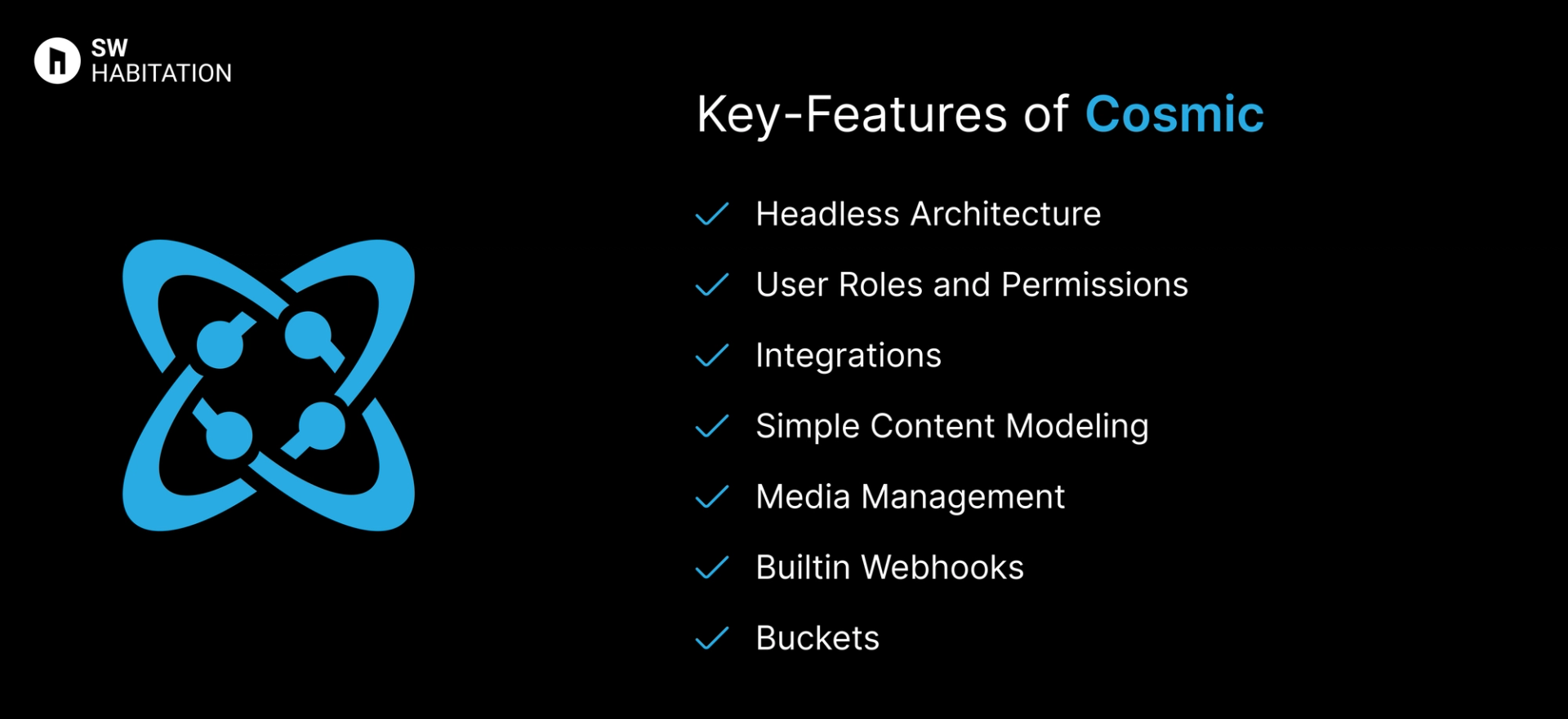
- Headless Architecture: It deliver content anywhere with its API-first approach.
- User Roles and Permissions: Manage access control for different team members.
- Integrations: Works well with frameworks like Next.js, React, and Vue.
- Simple Content Modeling: Create custom content structures without hassle.
- Media Management: Upload and manage media files effortlessly.
- Builtin Webhooks: Automate workflows by triggering events when content changes.
- Buckets: Organize content into “buckets” to keep everything neat and tidy.
Advantages of Cosmic
- Flexible: It works with any tech stack.
- Easy Setup: Get up and running in minutes with minimal configuration.
- Great for Small Projects: It's perfect for blogs, portfolios, and marketing sites.
- Content Buckets: It organize content smartly for easier management.
- API-First Approach: Ideal if you love working with APIs.
Disadvantages of Cosmic
- Pricing Can Add Up: Costs increase as content needs grow.
- Limited Free Plan: The free tier has some restrictions.
- Not Ideal for Large Projects: Lacks the complexity needed for enterprise-level projects.
Comparison Between Prismic vs Cosmic
Use Cases of Prismic
- Blogs & Portfolios: Simple setup, flexible design.
- Product Teams: Easy publishing without dev involvement.
- Marketing Websites: Build fast, scalable landing pages and sites.
- Multi-language Content: Perfect for global websites.
- Agencies: Quick project delivery with reusable content slices.
Use Cases of Cosmic
- Small Projects: Portfolios, blogs, and marketing sites.
- Projects with Simple Content Structures: No need for overly complex setups.
- Developers Who Love APIs: Pull content into any front-end framework easily.
- Startups: Quick setup with minimal infrastructure.
Other Resources
Conclusion
Headless CMS platforms make managing your website very simple and easy. Whether you’re running a blog, online store, or business, they handle the tough stuff so you can focus on your content.
With a user-friendly interface and the ability to work with any technology, you can create a site that really fits your needs.
These platforms are flexible, secure, and can grow with you. They offer features like custom content, easy editing, and integrations with other tools. Choose the one that fits your requirements and start building your dream website today 🚀
Frequently asked questions
Is Prismic free to use?
Yes, there’s a free tier. Paid plans unlock more features like roles, localization, and higher API limits.
What is Slice Machine in Prismic?
It’s a tool for building reusable, component-based content sections (slices) that editors can use to design pages.
Does Prismic support multi-language content?
Yes, multi-language/localization is supported natively.
Can I self-host Prismic?
No, Prismic is a fully managed cloud service.
Is Prismic good for enterprise projects?
Yes, but enterprises may prefer platforms with more customization and control (like Strapi or Contentful).
What is Cosmic?
Cosmic is a headless CMS that helps you manage content through an easy-to-use dashboard while serving it via APIs.
Do I need to know coding to use cosmic?
Nup Not really. You can manage content without coding, but developers can use its APIs for custom setups.
Can I use Cosmic with React or Next.js?
Yup, Cosmic is super friendly with React, Next.js, and other frameworks.
Is Cosmic free?
There’s a free plan for small projects, but you’ll need a paid plan for bigger sites or more features.
Does cosmic support media files like images and videos?
Yes, You can upload and manage media files directly in the dashboard.