
Mantine vs. Vanilla Framework CSS
 By SW Habitation
Mantine

Vanilla Framework CSS
You know how building a website can feel like a lot, especially when you’re trying to style every little thing yourself? Buttons, forms, layouts… it adds up fast. That’s where UI frameworks really save the day. They give you a bunch of premade design elements that you can just drop in and go. It’s like having a design starter pack that helps your site look clean and professional, without spending forever tweaking the details.
What is Mantine?
Mantine is a React component library with over 100 UI components and 50+ custom hooks, designed to help developers build modern, accessible, and performant UIs. It supports RTL layouts, dark mode, and complete theme customization, all while staying lightweight.
Mantine doesn’t force you into a predefined design system. You build your own style while enjoying great developer experience, full TypeScript support, and zero CSS-in-JS lock-in.
Key Features of Mantine
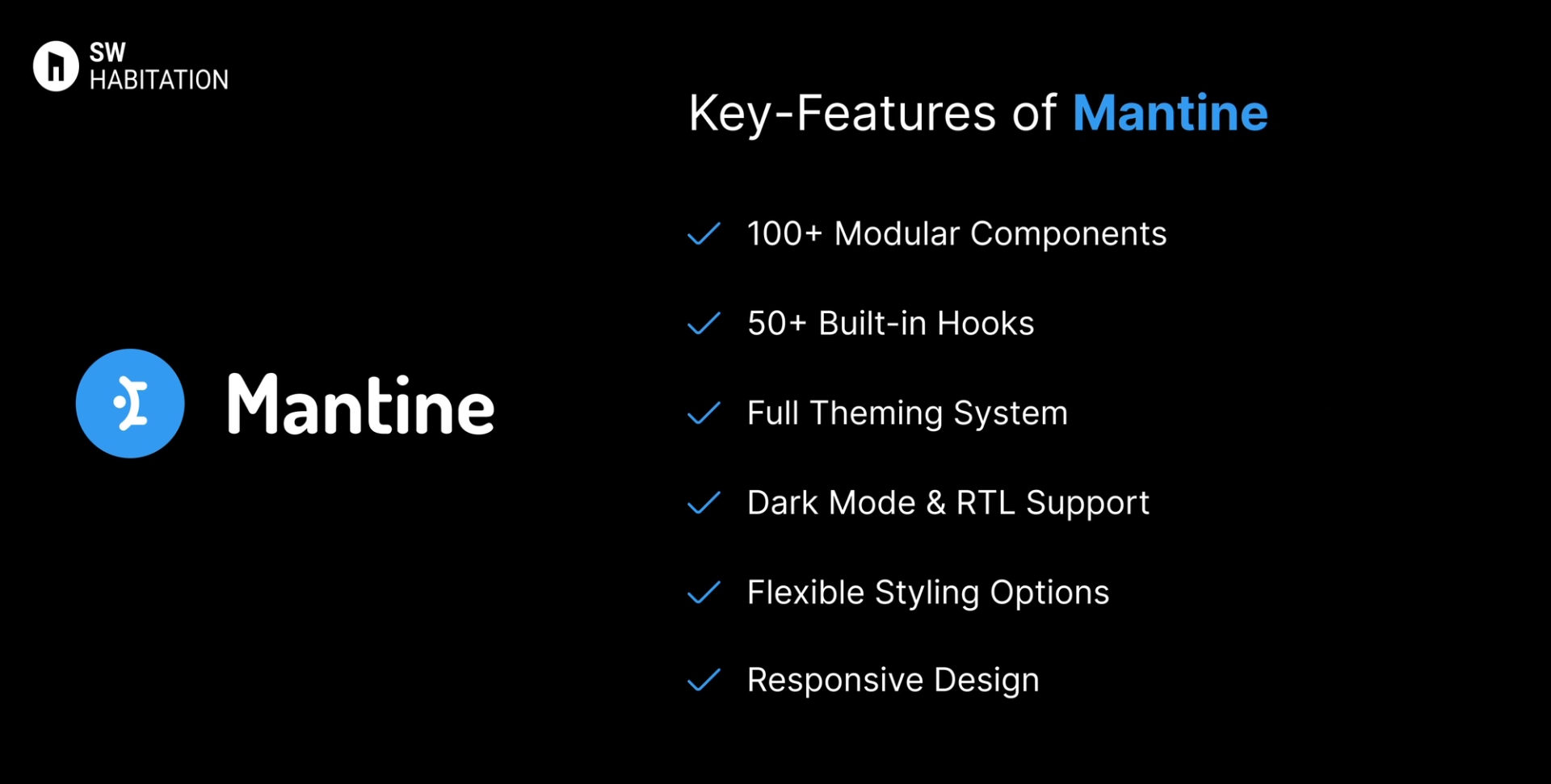
- 100+ Modular Components: Buttons, modals, tabs, date pickers, accordions, and more.
- 50+ Built-in Hooks: Clipboard, notifications, form validation, hotkeys, modals, etc.
- Full Theming System: Custom colors, fonts, spacing, radii, shadows, etc. with MantineProvider.
- Dark Mode & RTL Support: Native dark mode toggle and right-to-left support out of the box.
- Flexible Styling Options: Use Emotion, CSS Modules, or inline styles — your choice.
- Responsive Design: Built-in Grid and responsive props.
Advantages of Mantine
- Fast Development: Prebuilt components + hooks mean fewer extra dependencies.
- Design Freedom: No locked-in theme or design system — perfect for building your own brand UI.
- Dark Mode + RTL: Native support with easy toggles — no extra setup.
- Hook-Powered: Includes handy hooks like useClipboard, useHotkeys, useForm, etc.
- Lightweight: Optimized and tree-shakable — loads faster with a smaller bundle size.
- Fully Typed: Built with and for TypeScript — no need for custom typings.
Disadvantages of Mantine
- Smaller Community: Limited plugins, templates, and community resources compared to MUI or Bootstrap.
- No Predefined Design System: Offers full freedom but requires extra design effort for polished UIs.
- Still Evolving: Newer framework; some components may lack long-term maturity.
- Lacks Pro-Level Components: No built-in advanced elements like data grids or calendars.
- Low Enterprise Adoption Not yet common in large-scale corporate environments.
What is Vanilla Framework CSS?
Vanilla Framework is an open-source, lightweight, and extensible CSS framework developed by Canonical (the creators of Ubuntu). It’s designed to provide a consistent and responsive design foundation without unnecessary bloat. Unlike component-heavy frameworks such as Bootstrap or Foundation, Vanilla focuses on clean base styles, responsive layouts, and utility classes that can be extended into full design systems.
It’s particularly popular for enterprise projects and design systems where consistency, accessibility, and scalability matter more than having hundreds of prebuilt UI widgets.
Key Features of Vanilla Framework
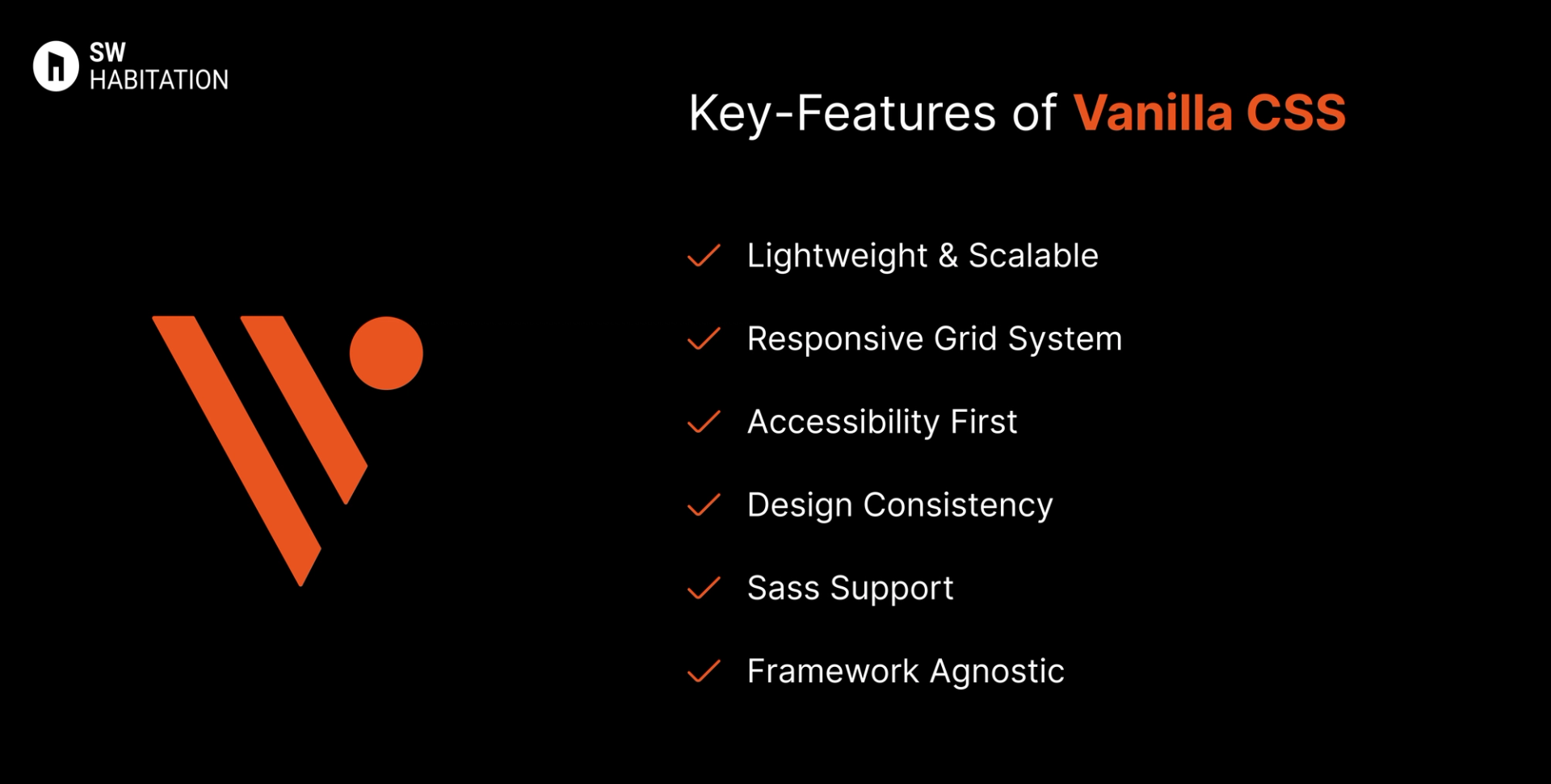
- Lightweight & Scalable: Provides only what you need, no bloat.
- Responsive Grid System: Built-in grid system for mobile-first design.
- Accessibility First: Designed with WCAG compliance in mind.
- Design Consistency: Used by Canonical across Ubuntu products.
- Sass Support: Highly customizable via Sass variables and mixins.
- Framework Agnostic: Works with plain HTML, React, Angular, Vue, or any setup.
Advantages of Vanilla CSS
- Good Documentation: Clear guidelines with usage examples.
- Clean and Lightweight: Minimal CSS, loads fast, and avoids bloat.
- Consistent UI/UX: Ideal for creating unified design systems.
- Enterprise-ready: Backed by Canonical, proven in large-scale projects.
- Customizable with Sass: Change themes, colors, and spacing easily.
- Accessibility Focused: WCAG-compliant components for inclusive design.
Disadvantages of Vanilla Framework
- Less Popular in Freelance/Startup Space: Mainly adopted by enterprises like Canonical.
- No Built-in JavaScript: Only CSS, you’ll need custom JS for interactivity.
- Limited Community Support: Not as popular as Bootstrap or Tailwind.
- Learning Curve with Sass: Beginners may find customization tricky.
- Smaller Ecosystem: Fewer templates, themes, and third-party plugins.
Comparison Between Mantine vs Vanilla Framework CSS
Use Cases of Mantine
- Custom UIs with full design freedom
- Modern dashboards, admin panels
- Lightweight SaaS apps
- RTL and dark-mode web apps
- Startups and solo developers
Use Cases of Vanilla Framework CSS
- Company Websites: clean, responsive base styling.
- Dashboards & Web Apps: modular grid + utility classes.
- Design Systems: consistent Sass variables & mixins.
- Prototypes / MVPs: fast setup with pre-styled elements.
Other Resources
Conclusion
UI frameworks make building a polished website way easier. Whether you're working on something simple or a big project, they help you get things looking just right without having to stress over every little design decision. With ready-to-use components, responsive layouts, and modern styles, you can build faster and smarter.
So, pick one that works for you, and start creating a site that looks amazing from the get-go.
Frequently asked questions
Is Mantine production-ready?
Yes. Mantine is stable, actively maintained, and used in real-world production apps across various industries.
Does Mantine support dark mode and RTL?
Absolutely. Dark mode and right-to-left (RTL) layout support are built-in and easy to toggle with the theme.
Can I use Mantine without Emotion?
Mantine uses Emotion by default, but you can also style components using inline styles, CSS Modules, or even external CSS.
Does Mantine work with TypeScript?
Yes, Mantine is built with full TypeScript support, including auto-complete, prop types, and IDE hints.
How does Mantine compare to MUI or Chakra UI?
Mantine is more flexible with fewer design constraints. It offers built-in hooks and modern developer experience, while MUI and Chakra follow stricter design systems.
Is Vanilla Framework free to use?
Yes, it is open-source and completely free to use under the LGPLv3 license.
Does Vanilla Framework include JavaScript components?
No, it’s a CSS-only framework, so you need to implement JavaScript for dropdowns, modals, etc.
Is Vanilla Framework beginner-friendly?
Yes, for basic usage. But customization requires some knowledge of Sass.
Who uses Vanilla Framework?
It is used by Canonical (Ubuntu) and related projects, but developers can also use it for general web projects.
Should I use Vanilla Framework instead of Bootstrap?
If you want a lightweight, enterprise-ready design system with a focus on accessibility, Vanilla is great. But if you need ready-to-use components with JS support, Bootstrap might be better.