
Glitch vs. Azure Static Web Apps
 By SW Habitation
Glitch

Azure Static Web Apps
You know when you’ve finished building your website and just want to get it online without dealing with all the techy stuff? That’s where deployment platforms help. They make it super easy to put your site live, just connect your code, click a button, and it’s up and running. No need to worry about servers or complicated setups.
They also take care of the important things like speed, security, and updates in the background. So while they handle the heavy stuff, you can focus on making your website look good and work great. It's simple, right?
What is Glitch?
Glitch is a cloud-based platform that allows developers, designers, and creators to build, share, and remix web applications instantly. It focuses on simplicity and collaboration — making it possible to prototype or deploy full-stack apps right from the browser, without complex setups. Think of it as a mix of a code editor, hosting service, and community all in one.
Key Features of Glitch
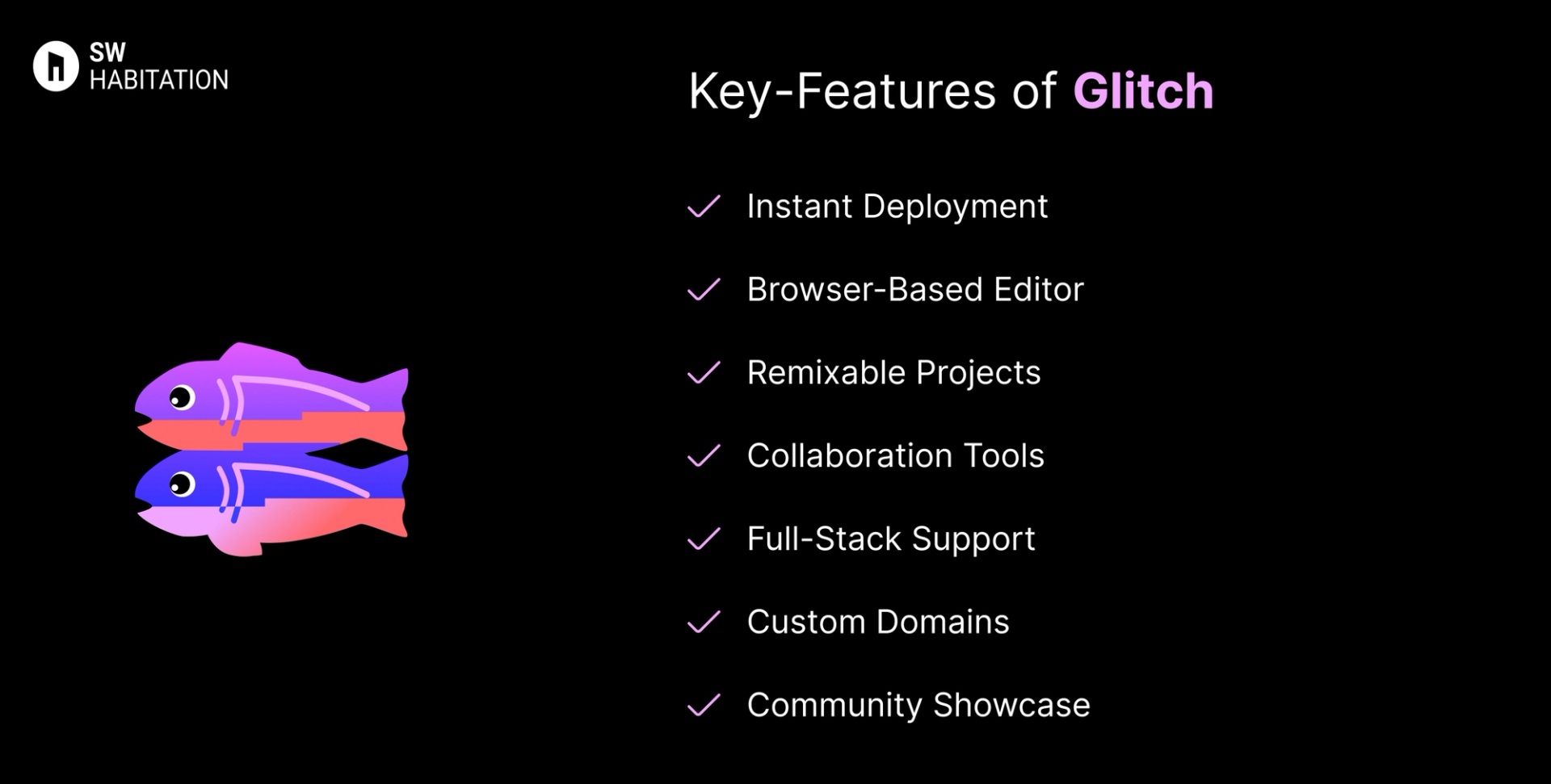
- Instant Deployment: Apps go live as soon as you start coding — no build steps needed.
- Browser-Based Editor: Code, preview, and debug directly in your browser.
- Remixable Projects: Copy and modify existing apps with one click.
- Collaboration Tools: Real-time collaboration, like Google Docs for coding.
- Full-Stack Support: Node.js-based backend and static frontend hosting.
- Custom Domains: Connect your own domain with free HTTPS.
- Community Showcase: Explore, share, and remix projects from other creators.
Advantages of Glitch
- Free to Start: Generous free tier for small apps and prototypes.
- Collaborative: Real-time pair programming and sharing features.
- Beginner-Friendly: Perfect for people learning web development.
- Instant Hosting: No deployment process — your app is live immediately.
- Creative Community: Large library of remixable apps and templates.
Disadvantages of Glitch
- Less Control: Infrastructure and environment are abstracted away.
- Not Enterprise-Ready: Best suited for learning, prototypes, and small projects.
- Scaling Limitations: Cannot handle very high traffic like AWS or DigitalOcean.
- Limited Language Support: Primarily focused on JavaScript/Node.js.
- Performance Limits: Free apps sleep after inactivity; limited resources.
What is Azure Static Web Apps?
Azure Static Web Apps is a deployment platform by Microsoft Azure that focuses on delivering static sites and frontend applications. It automatically builds and deploys your app straight from your GitHub or Azure DevOps repository, making the whole process smooth and fast. Plus, it comes with built-in support for APIs using Azure Functions, making it great for modern, serverless architectures.
Key Features of Azure Static Web Apps
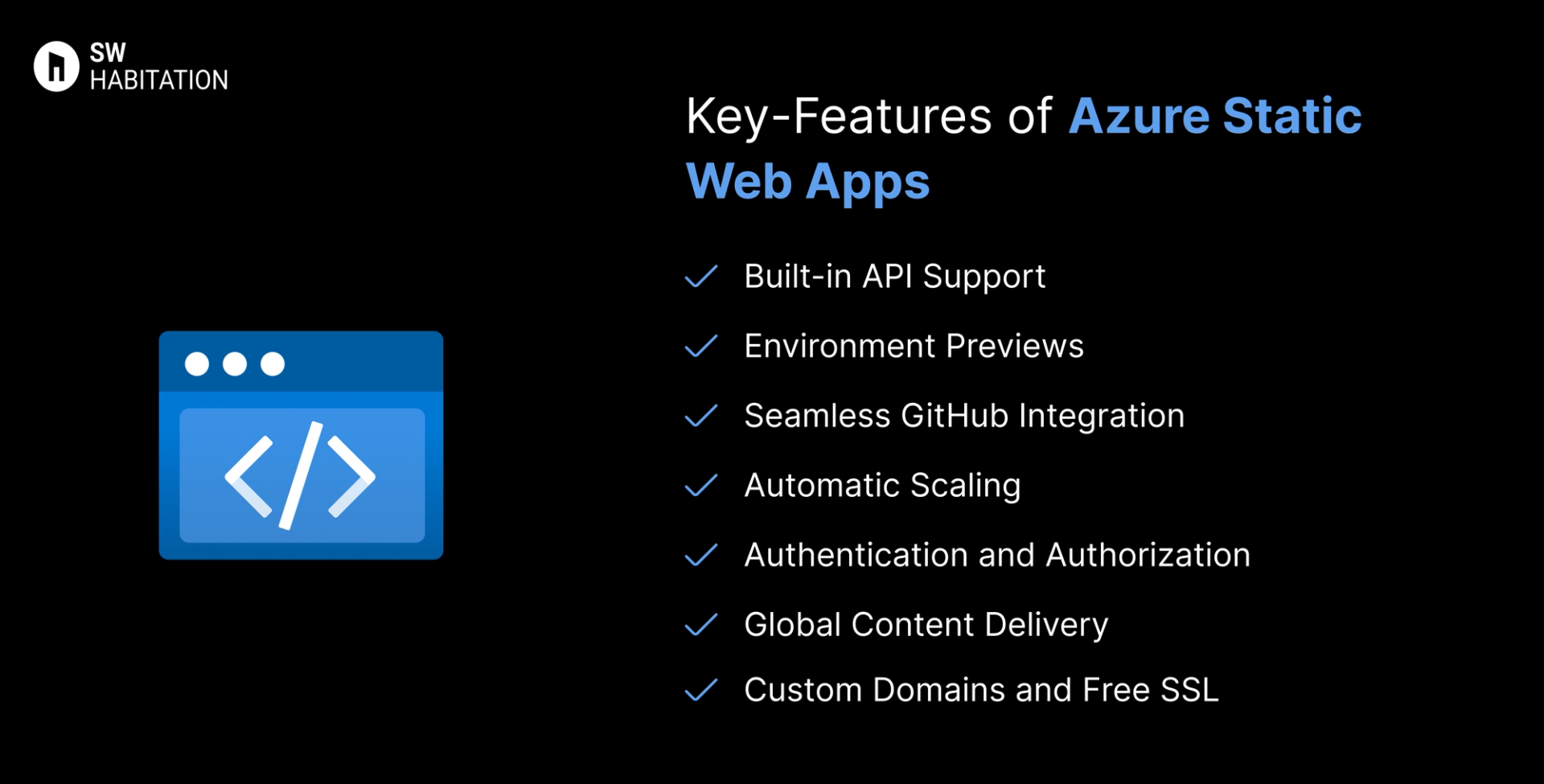
- Built-in API Support: Integrate backend functionality using Azure Functions.
- Environment Previews: Preview changes from pull requests before merging them into production.
- Seamless GitHub Integration: Automatically builds and deploys your app on every push.
- Automatic Scaling: No need to worry about infrastructure — Azure handles scaling for you.
- Authentication and Authorization: Supports authentication via providers like GitHub, Twitter, and Azure AD.
- Global Content Delivery: Content is distributed across a global CDN for lightning-fast load times.
- Custom Domains and Free SSL: Easily add your custom domain with free SSL certificates.
Advantages of Azure Static Web Apps
- Free SSL and Custom Domains: No hassle with certificates; it’s all managed for you.
- Authentication Options: Supports third-party authentication like GitHub, Twitter, and Azure AD out of the box.
- Environment Previews: Test changes in preview environments before pushing to production.
- Easy Deployment: GitHub integration means every push automatically triggers a build and deploy.
- Backend Support: Built-in API support with Azure Functions makes adding server-side logic simple.
- Global Reach: Content is served through Azure’s global CDN, ensuring fast delivery worldwide.
Disadvantages of Azure Static Web Apps
- Less Popular Than Competitors: Compared to Vercel or Netlify, it’s not as widely adopted in the frontend community.
- Pricing Uncertainty: While there’s a free tier, costs can creep up as you scale and add features.
- Limited Backend Options: It’s great for static frontends, but backend support is limited to Azure Functions.
- Azure Learning Curve: Familiarity with Azure can make things smoother, but beginners might feel overwhelmed.
- Platform Lock-In: Like most cloud services, migrating away can be tricky once you’re fully integrated.
Comparison Between Glitch vs Azure Static Web Apps
Use Cases of Glitch
- Hackathons & Demos: Fast way to share live projects.
- Creative Apps: Perfect for fun experiments and community-driven projects.
- Prototyping: Quickly test app ideas without setup.
- Collaborative Coding: Real-time coding with teammates.
- Learning Web Development: Great for beginners practicing JavaScript and Node.js.
Use Cases of Azure Static Web Apps
- Enterprise Solutions: Leverage Microsoft Azure’s reliability and security.
- Serverless Architectures: Integrates naturally with Azure Functions for backend logic.
- JAMstack Applications: Perfect for static sites with dynamic content powered by APIs.
- Continuous Deployment: Automate builds and deployments directly from your GitHub repository.
Other Resources
Conclusion
Deployment platforms are a total game changer if you’re looking to launch your website quickly, reliably, and without any trouble. Whether it’s a personal portfolio, a startup site, or a growing business platform, they handle the technical heavy lifting like hosting, security, and scalability so you can stay focused on building great experiences for your users.
You’re not boxed into a single approach. Most platforms integrate smoothly with the tools and frameworks you already love, letting you deploy directly from your Git repository, preview updates, and roll back with ease. With lightning-fast performance and dependable uptime, deployment platforms simplify the path from code to production. Pick the one that aligns with your workflow, and you’re all set to launch with confidence 🚀
Frequently asked questions
What is Glitch?
Glitch is a cloud-based platform where you can build, host, and share web applications easily without needing complex setup.
Is Glitch free to use?
Yes, Glitch offers a free plan with basic features. They also have paid plans for more storage, private projects, and advanced usage.
Do I need to install anything to use Glitch?
No, Glitch works directly in your browser. You don’t need to install software on your computer.
Does Glitch support custom domains?
Yes, with paid plans you can connect your own domain name to your Glitch app.
Is Azure Static Web Apps free to use?
There’s a generous free tier, including custom domains, SSL, and 100,000 monthly requests—ideal for personal projects and MVPs.
How does deployment work with Azure Static Web Apps?
Connect your GitHub repo, and it auto-deploys on push. Azure sets up your build pipeline + staging + production environments automatically.
Does Azure Static Web Apps include backend support?
Yes, You can run Azure Functions as serverless APIs right alongside your frontend—no separate backend hosting needed.
What frameworks work with Azure Static Web Apps?
It supports React, Vue, Angular, Blazor, Next.js, and more. It’s optimized for modern frontend frameworks and static site generators.