
DatoCMS vs. Kontent.ai
 By SW Habitation
DatoCMS

Kontent.ai
You know, when you wanna make a website or a blog but don’t wanna mess with too much code? That’s where a CMS (Content Management System) comes in. It’s like a super easy tool that helps you add text, pictures, and videos to your site without needing to be a tech genius. You just log in, click a few buttons, and your content is live. It's quite simple, right?
What is DatoCMS?
DatoCMS is a headless CMS built to manage content and deliver it across websites, mobile apps, and beyond. It gives developers the flexibility to work with their favorite front-end frameworks while providing content creators with a clean, intuitive interface.
Whether you’re building a personal blog or handling a massive e-commerce website, DatoCMS simplified the process by providing a simple dashboard and robust API for content delivery.
Key Features of DatoCMS
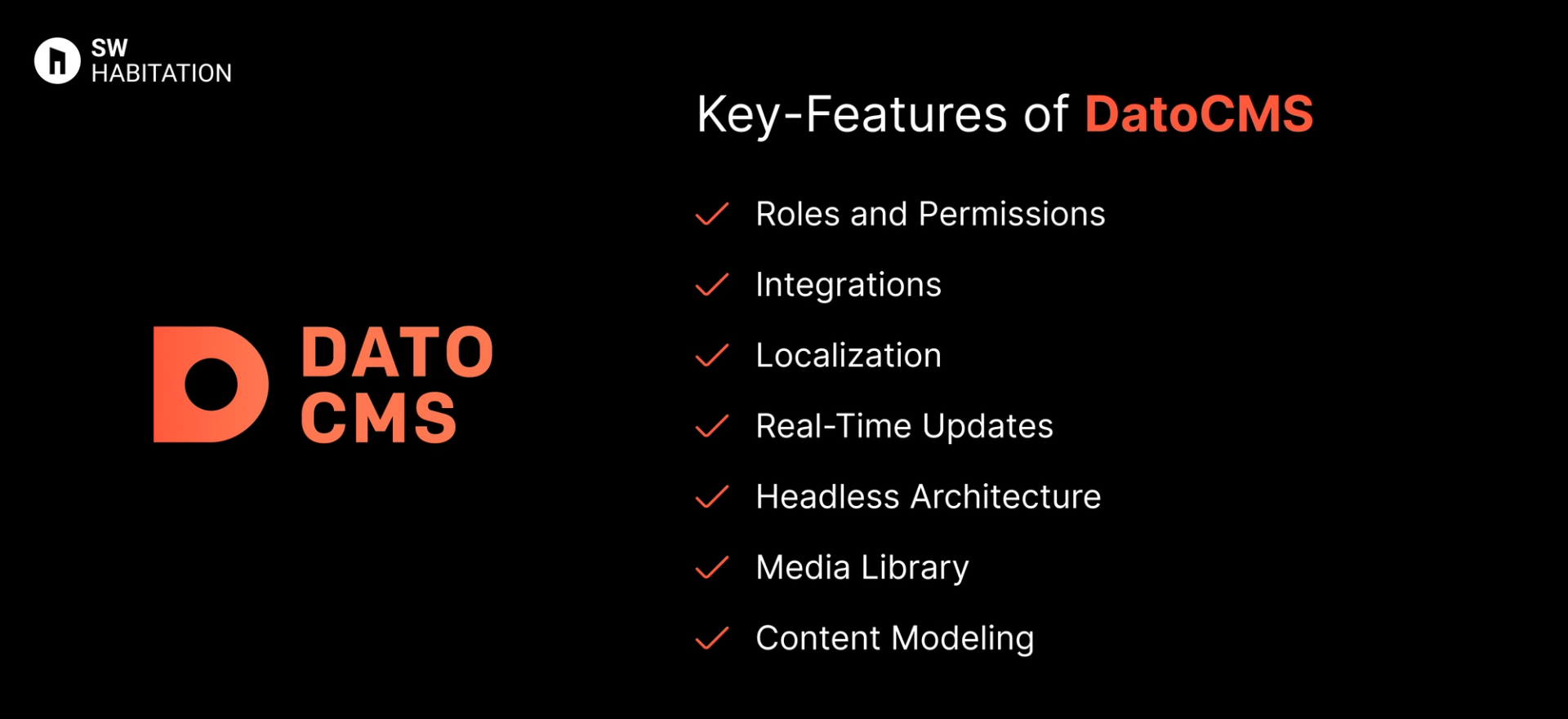
- Roles and Permissions: Manage team access with fine-grained control.
- Integrations: Works well with Next.js, Gatsby, and other static site generators.
- Localization: Built-in support for multi-language content.
- Real-Time Updates: Content changes reflect instantly across all platforms.
- Headless Architecture: Deliver content anywhere using GraphQL or REST APIs.
- Media Library: Manage images, videos, and files with ease.
- Content Modeling: Design content structures that fit your project needs.
Advantages of Datocms
- Great for JAMstack: Integrates seamlessly with modern web technologies.
- User-Friendly: Clean UI for content editors — no technical knowledge required.
- Simple Setup: Get started quickly with minimal configuration.
- Scalable: Handles projects of all sizes, from small blogs to large applications.
- GraphQL Support: Fetch exactly the data you need with powerful queries.
Disadvantages of Datocms
- Learning Curve: GraphQL is powerful but requires some learning if you’re new to it.
- Paid Plans for Advanced Features: Features like advanced roles and high traffic require a paid plan.
- Limited Free Plan: The free tier has restrictions.
What is Kontent.ai?
Kontent.ai is a cloud-based headless CMS (software-as-a-service) designed to empower organizations to manage, structure, and deliver content via APIs to any digital channel—websites, mobile apps, knowledge portals, IoT, and beyond.
It decouples content from presentation, enabling developers to build with their favorite technologies while giving teams centralized, structured control. Controlling complex workflows, governance, and collaboration is its core strength, especially for enterprise and regulated environments.
Key Features of Kontent.ai
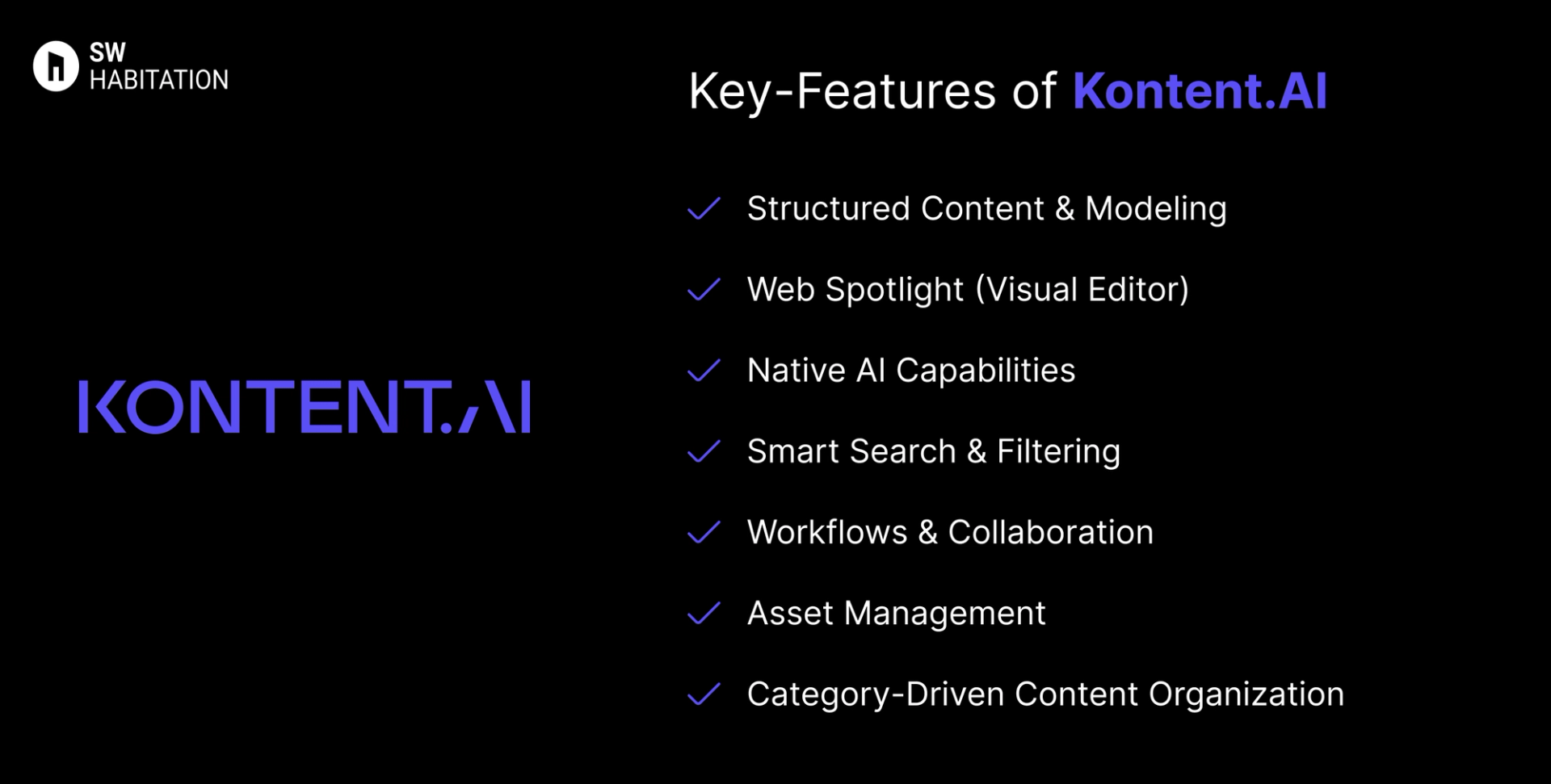
- Structured Content & Modeling: Build modular content types and reusable components for consistent and flexible content reuse.
- Web Spotlight (Visual Editor): Inline editing with live and device-specific previews—even supports creating and arranging pages without developer input.
- Native AI Capabilities: Includes AI-assisted localization, rich text enhancements, content generation, and automated asset tagging all built directly into the platform.
- Smart Search & Filtering: AI-powered search understands context and intent, making finding content faster and more intuitive.
- Workflows & Collaboration: Support for comments, version control, approvals, scheduling, and rich feedback loops.
- Asset Management: Custom asset domains, secure organization, sorting, and secure file delivery.
- Category-Driven Content Organization: Collections, taxonomies, and content reuse tracking help keep large repositories manageable and organized.
Advantages of Kontent.ai
- Trusted by Enterprises: Recognized as a G2 Leader in Spring 2025 for ease of use, setup, and support.
- Intuitive Visual Editing: Web Spotlight enables easy, in-context editing and page creation without waiting for devs.
- Enterprise-Grade Governance: Designed for complex operations, governance, and compliance-heavy workflows.
- Structured Content for Omni-channel: Efficiently reuse modular content across all platforms, ensuring consistency and scalability.
- Built-in AI Assistance: Get powerful AI features like localization and content creation—without external tools.
Disadvantages of Kontent.ai
- Customization Bound by SaaS Limits: Unlike open-source systems, deeper customization might be restricted.
- Proprietary and SaaS Only: You cannot self-host—you're fully dependent on their cloud platform.
- Potential Cost: Tailored for mid to large organizations; advanced features may come with enterprise-level pricing.
Comparison Between DatoCMS vs Kontent.ai
Use Cases of DatoCMS
- Teams with Editors and Developers: Editors get a clean UI, while developers enjoy the flexibility of GraphQL.
- JAMstack Lovers: Works seamlessly with static site generators like Next.js and Gatsby.
- Multi-Language Projects: Built-in localization makes managing translations easy.
- Content-Heavy Websites: Ideal for blogs, e-commerce, and marketing sites.
Use Cases of Kontent.ai
- Global, Multi-Channel Brands: Deliver modular content across markets, languages, and devices seamlessly.
- Highly Regulated Industries: Insurance, healthcare, finance—where workflow, audit trails, and compliance matter.
- Knowledge Hubs & Portals: Build brand portals, internal knowledge bases, or customer support hubs using structured content.
- Enterprise Content Operations: Teams collaborating in parallel, managing thousands of content assets and workflows.
Conclusion
Headless CMS platforms make managing your website very simple and easy. Whether you’re running a blog, online store, or business, they handle the tough stuff so you can focus on your content.
With a user-friendly interface and the ability to work with any technology, you can create a site that really fits your needs.
These platforms are flexible, secure, and can grow with you. They offer features like custom content, easy editing, and integrations with other tools. Choose the one that fits your requirements and start building your dream website today 🚀
Frequently asked questions
Is DatoCMS good for editors?
Yes, DatoCMS has an intuitive, user-friendly admin interface that’s designed for content editors. It’s easy to add, update, and manage content without needing to touch code.
Is DatoCMS free to start?
DatoCMS has a free tier for small projects. It’s great for personal or small business sites, offering a manageable amount of content and API calls before you need to upgrade.
Does DatoCMS have image optimization?
Yes, DatoCMS provides powerful image optimization tools right out of the box. You can resize, crop, and optimize images for faster performance and better user experience.
What frontend can I use with DatoCMS?
DatoCMS is frontend-agnostic, so you can use any framework or static site generator you prefer—React, Next.js, Gatsby, Vue, or even plain HTML. It's flexible to meet the needs of any project.
Is Kontent.ai self-hosted or cloud-only?
Fully cloud-based SaaS; no self-hosted version.
Can I preview content visually before publishing?
Yes, thanks to the Web Spotlight visual editor with device, live, and publish-preview modes.
Does Kontent.ai support AI-powered content tools?
Yes, AI features like localization, content generation, and tagging are native.
Why is structured content important here?
Structured modular content enables reuse, consistency across channels, and easier updates at scale.
Is Kontent.ai good for collaboration across teams?
Absolutely, includes versioning, comments, workflows, and strong asset organization.