
Chota CSS vs. Spectre CSS
 By SW Habitation
Chota CSS

Spectre CSS
You know how building a website can feel like a lot, especially when you’re trying to style every little thing yourself? Buttons, forms, layouts… it adds up fast. That’s where UI frameworks really save the day. They give you a bunch of premade design elements that you can just drop in and go. It’s like having a design starter pack that helps your site look clean and professional, without spending forever tweaking the details.
What is Chota CSS?
Chota CSS is a micro like ~3 KB ultra-lightweight CSS framework built on the idea of "less is more." It’s designed to give you just the essentials a simple grid system, clean typography, forms, and utility classes without the extra bulk that slows projects down. With its minimal size and no need for preprocessing, Chota is one of the easiest frameworks to pick up and use.
Unlike heavy frameworks that come packed with complex components, Chota focuses on speed, simplicity, and performance. You can drop it into your project and instantly have a clean, responsive base to build on, making it perfect for prototypes, small apps, or any project where minimal bloat and faster load times matter most.
Key Features of Chota CSS
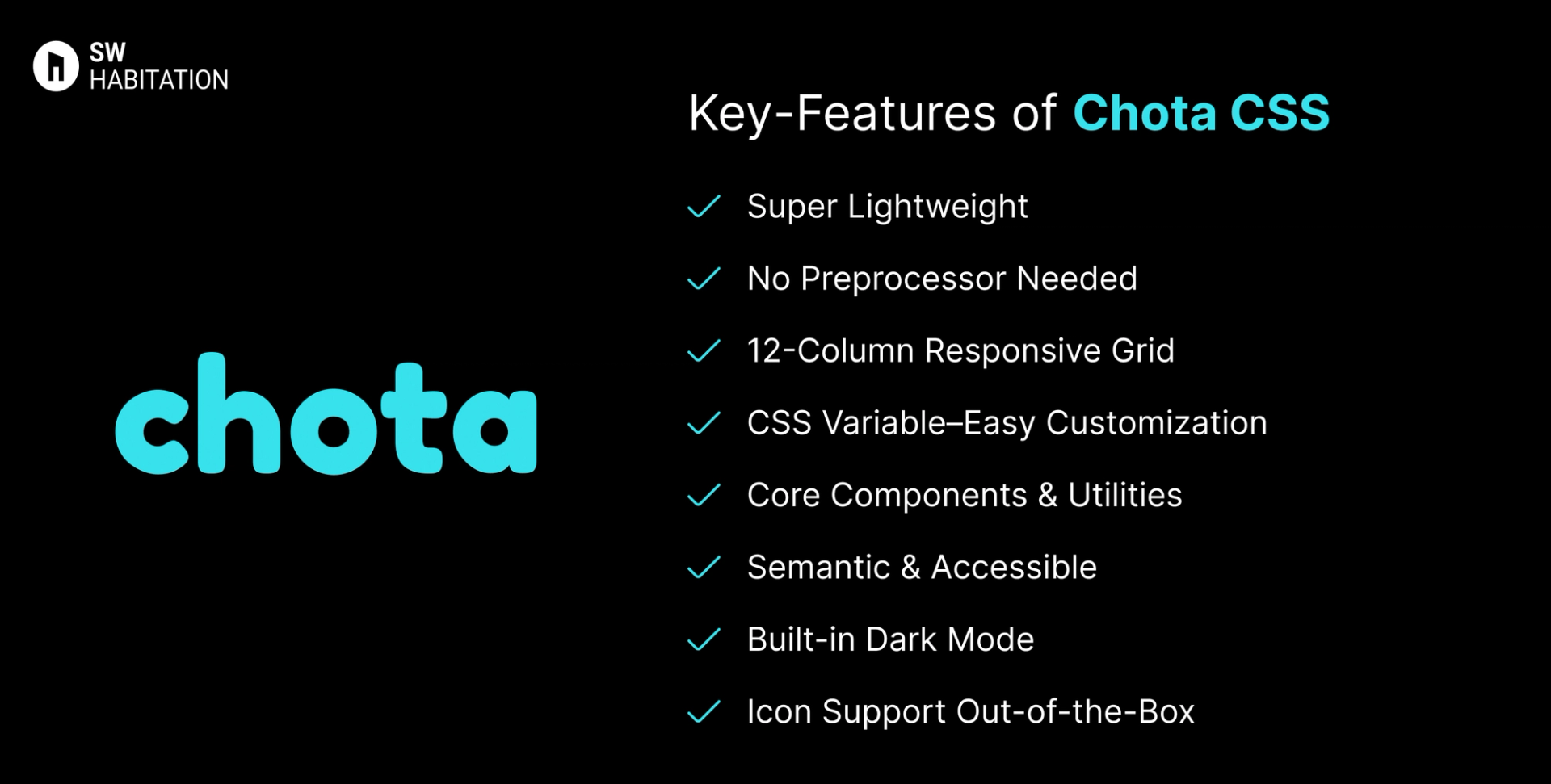
- Super Lightweight: Only about 3 KB (minified + gzipped) — blazing fast load times.
- No Preprocessor Needed: Pure CSS—just include the file and start coding.
- 12-Column Responsive Grid: Flexible and fluid layout system.
- CSS Variable–Easy Customization: Tweak theme colors, fonts, grid size with CSS variables.
- Core Components & Utilities: Includes basic components—buttons, navs, tags—and utilities for tables, input groups, icon support, and more.
- Semantic & Accessible: Styles follow semantic HTML, making markup clean and accessible.
- Built-in Dark Mode: Supports customizable dark mode via CSS variables.
- Icon Support Out-of-the-Box: Easy integration with icon libraries like Icongram.
Advantages of Chota CSS
- Ultra Lightweight: Minimal file size like ~3 KB, ideal for performance-critical projects.
- Zero Setup: Plug-and-play—just link the CSS file, and you're ready.
- Simple Customization: Modify theme with only CSS variables.
- Good Semantics & Accessibility: Designed to use semantic tags with built-in accessibility.
- Responsive Grid System: Handy 12-column grid without the fuss.
- Dark Mode Ready: Easily theme to dark mode via CSS variables.
Disadvantages of Chota CSS
- Limited Components – Compared to larger frameworks, Chota offers only basic UI elements.
- No JS Included – Lacks interactivity out-of-the-box; you will need to add your own JavaScript.
- Small Ecosystem – Fewer themes, templates, or community resources available.
- Not Ideal for Complex UIs – Lacks advanced patterns needed for enterprise-level apps.
- Requires Manual Dark Mode Setup – Needs custom CSS variable overrides for theming.
What is Spectre CSS ?
Spectre.css is a lightweight (~10 KB gzipped), responsive, and modern CSS framework crafted by Yan Zhu. It offers a solid foundation for building clean UIs with minimal overhead, utilizing Flexbox-based layouts, pure CSS components, and utility classes—all designed with elegance and efficiency in mind.
Key Features of Spectre CSS
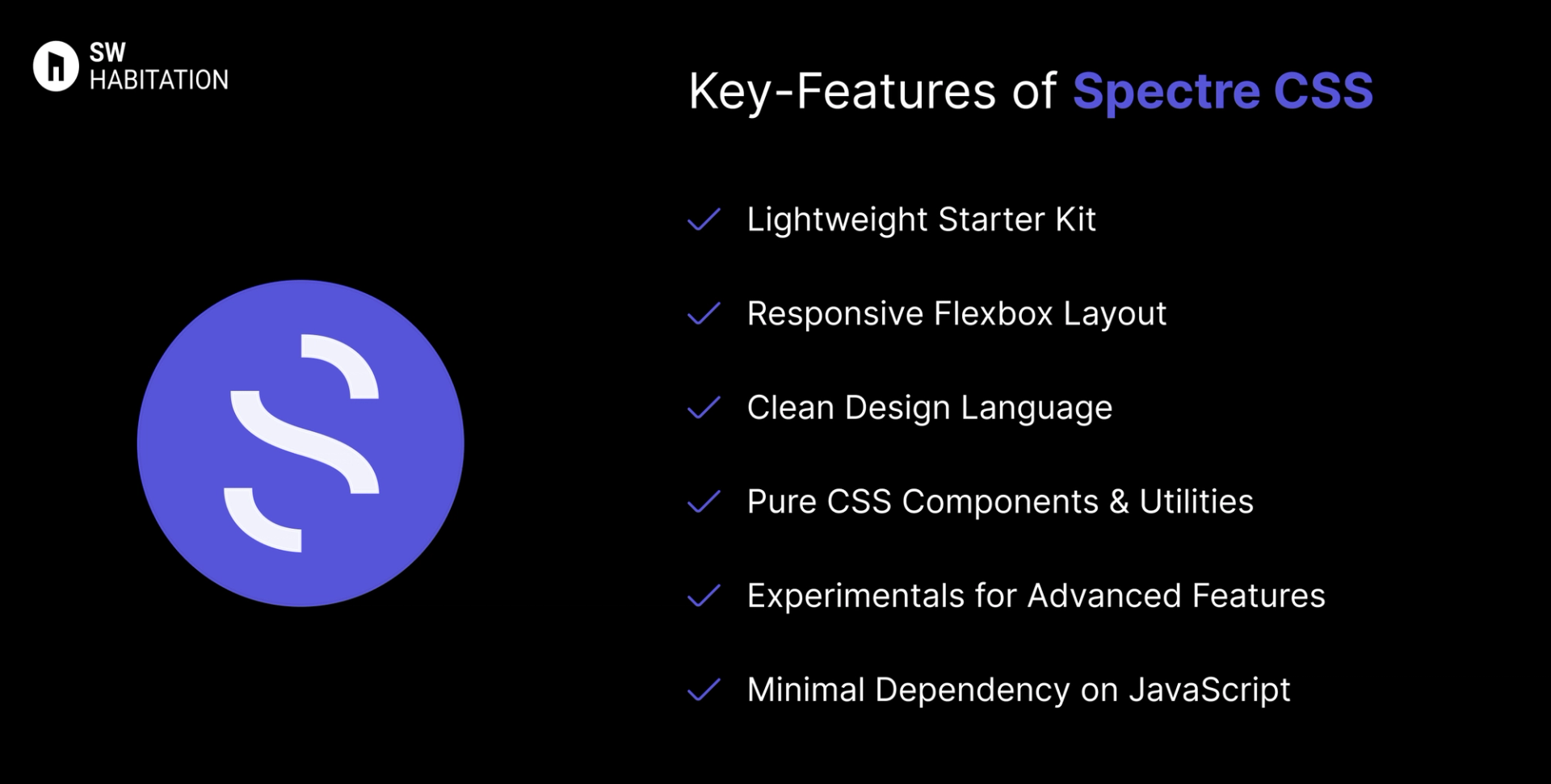
- Lightweight Starter Kit: Only about 10 KB gzipped, keeping your project snappy.
- Responsive Flexbox Layout: Mobile-friendly, modern layout system using Flexbox.
- Clean Design Language: Comes with thoughtfully designed elements and a consistent UI approach.
- Pure CSS Components & Utilities: Includes buttons, forms, typography, icons, cards, toasts, modals, navbars, and more.
- Experimentals for Advanced Features: CSS-only components like carousels, parallax scrolling, comparison sliders, calendars, and off-canvas menus.
- Minimal Dependency on JavaScript: Leverages CSS pseudo-classes (:checked, :target, :hover) for interactivity, JavaScript can be added for enhanced behavior.
Advantages of Spectre CSS
- Free and Open Source (MIT License): No cost, great for personal and commercial use.
- Lightweight & Fast: Excellent for performance-focused applications.
- Responsive and Mobile-Ready: Built with modern Flexbox grid system.
- Rich Collection of Pure CSS Components: Modals, tooltips, badges, cards, and more without JS.
- Easily Customizable: Clean, modular CSS ready for styling tweaks.
Disadvantages of Spectre CSS
- Limited Documentation for Experimentals: Advanced CSS-only components may require extra exploration and understanding.
- CSS-Only Interactivity Has Limitations: Some interactive components may need JavaScript for full functionality.
- IE10+ Support Only (and Partial): Some older browser features may not be fully supported.
- Still Relatively Lightweight Ecosystem: Not as popular or widely used as Bootstrap, Tailwind, etc.
Comparison Between Chota CSS vs Spectre CSS
Use Cases of Chota CSS
- Learning Projects: Perfect for beginners experimenting with CSS frameworks.
- Embedded UIs: Admin panels inside tools, browser extensions, or IoT dashboards.
- Quick Prototypes: Great for hackathons, MVPs, and wireframes where speed matters.
- Minimalist Design: When you want clean, simple UIs without bloat.
- Tiny Websites: Personal blogs, documentation sites, small landing pages.
Use Cases of Spectre CSS
- Prototyping & Wireframing: Perfect for quickly creating functional UI mockups without heavy dependencies.
- Lightweight Websites: Ideal for landing pages, documentation sites, or blogs where performance is critical.
- Dashboards & Admin Panels: Comes with grids, forms, and utilities that fit well for minimal dashboards.
- Static Sites & JAMstack Projects: Works great with static site generators like Jekyll, Hugo, or Next.js (SSG).
- Fallback for Custom Designs: Can be used as a solid base layer if you’re planning to add custom CSS on top.
Other Resources
Conclusion
UI frameworks make building a polished website way easier. Whether you're working on something simple or a big project, they help you get things looking just right without having to stress over every little design decision. With ready-to-use components, responsive layouts, and modern styles, you can build faster and smarter.
So, pick one that works for you, and start creating a site that looks amazing from the get-go.
Frequently asked questions
Is Chota free?
Yes, Chota is open-source under the MIT license.
How do I include Chota?
Just include the CSS file via CDN:
<link rel="stylesheet" href="https://unpkg.com/chota">
Or install via npm/yarn and import it.
Can I customize themes?
Absolutely, just override CSS variables within your :root to change colors, fonts, spacing, grid settings, etc.
Is Chota good for dark mode?
Yes. You can switch to dark mode by overriding variables (e.g., --bg-color, --font-color) in your CSS.
Does Chota include JavaScript?
No, it's a CSS-only toolkit. For interactive elements (like modals), you'll need to add JavaScript separately.
Is Spectre.css free to use?
Yes, it’s completely free and open-source under the MIT license.
How do I include Spectre.css in my project?
You can install via npm, Yarn, Bower, CDN, or download the minified CSS directly from the docs.
Can Spectre handle interactivity without JavaScript?
Yes, Many components like modals, accordions, and carousels are built with pure CSS using pseudo-classes. JavaScript is optional and used only for enhanced behavior.
Which browsers does Spectre support?
Optimized for modern browsers; supports IE10+ with partial compatibility. Uses Normalize.css and Autoprefixer for broader coverage.