
Shadcn UI vs. Spectre CSS
 By SW Habitation
Shadcn UI

Spectre CSS
You know how building a website can feel like a lot, especially when you’re trying to style every little thing yourself? Buttons, forms, layouts… it adds up fast. That’s where UI frameworks really save the day. They give you a bunch of premade design elements that you can just drop in and go. It’s like having a design starter pack that helps your site look clean and professional, without spending forever tweaking the details.
What is Shadcn UI?
Shadcn UI is a beautiful and modern component library built on top of Radix UI, styled with Tailwind CSS, and intended for Next.js projects. It offers accessible, production-ready components with theming, variants, and built-in dark mode support.
You install components via CLI and get full control over the code.
Key Features of Shadcn UI
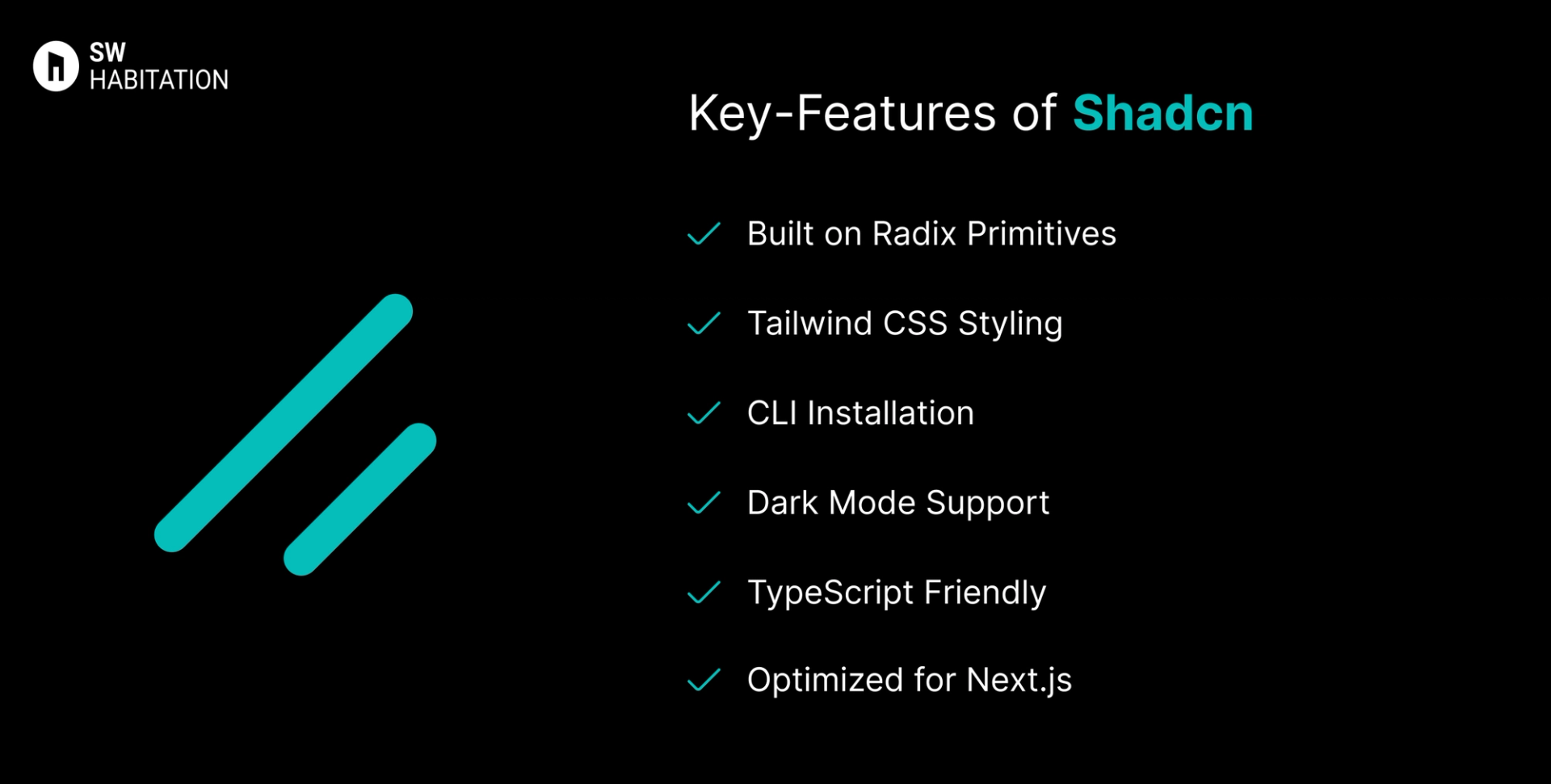
- Built on Radix Primitives: Accessibility and flexibility included.
- Tailwind CSS Styling: Easy customisation with utility-first approach.
- CLI Installation: Add only the components you need.
- Dark Mode Support: Pre-configured light and dark theme switching.
- TypeScript Friendly: Built entirely with TypeScript.
- Optimised for Next.js: Uses App Router structure and conventions.
Advantages of Shadcn UI
- Pre-styled and fast to use, ideal for building modern apps quickly.
- Easily theme-able using Tailwind and variants.
- Components are accessible by default.
- Ideal for SaaS apps, dashboards, and websites.
- Each component is editable because you own the code.
Disadvantages of Shadcn UI
- Requires Tailwind CSS, less suitable if you're not using Tailwind.
- Not suitable for other frameworks like Vue or Angular.
- Depends on Radix primitives, understanding Radix helps.
- Bundle size can grow if you install too many components.
- You need to manage components in your codebase manually.
What is Spectre CSS ?
Spectre.css is a lightweight (~10 KB gzipped), responsive, and modern CSS framework crafted by Yan Zhu. It offers a solid foundation for building clean UIs with minimal overhead, utilizing Flexbox-based layouts, pure CSS components, and utility classes—all designed with elegance and efficiency in mind.
Key Features of Spectre CSS
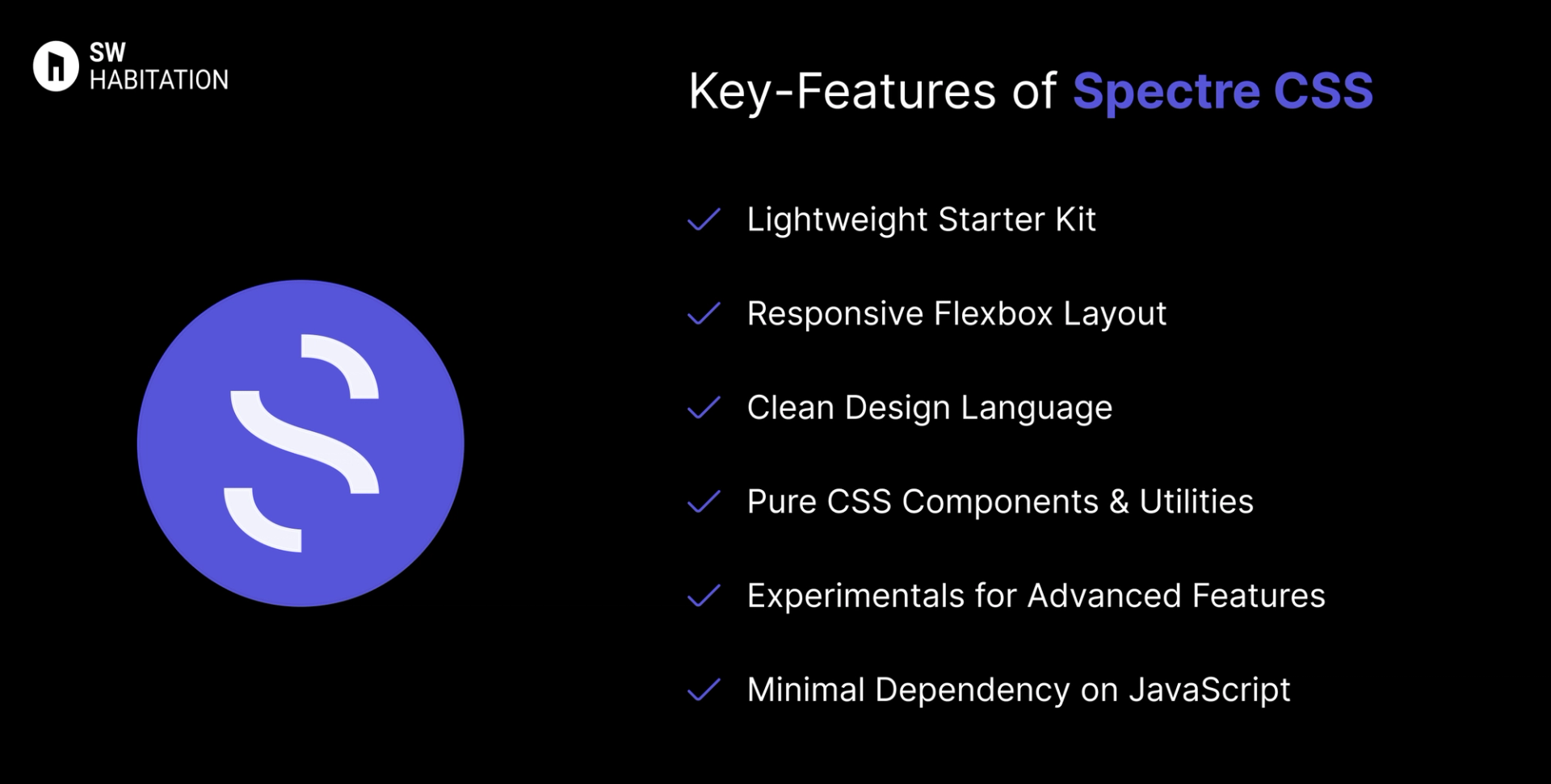
- Lightweight Starter Kit: Only about 10 KB gzipped, keeping your project snappy.
- Responsive Flexbox Layout: Mobile-friendly, modern layout system using Flexbox.
- Clean Design Language: Comes with thoughtfully designed elements and a consistent UI approach.
- Pure CSS Components & Utilities: Includes buttons, forms, typography, icons, cards, toasts, modals, navbars, and more.
- Experimentals for Advanced Features: CSS-only components like carousels, parallax scrolling, comparison sliders, calendars, and off-canvas menus.
- Minimal Dependency on JavaScript: Leverages CSS pseudo-classes (:checked, :target, :hover) for interactivity, JavaScript can be added for enhanced behavior.
Advantages of Spectre CSS
- Free and Open Source (MIT License): No cost, great for personal and commercial use.
- Lightweight & Fast: Excellent for performance-focused applications.
- Responsive and Mobile-Ready: Built with modern Flexbox grid system.
- Rich Collection of Pure CSS Components: Modals, tooltips, badges, cards, and more without JS.
- Easily Customizable: Clean, modular CSS ready for styling tweaks.
Disadvantages of Spectre CSS
- Limited Documentation for Experimentals: Advanced CSS-only components may require extra exploration and understanding.
- CSS-Only Interactivity Has Limitations: Some interactive components may need JavaScript for full functionality.
- IE10+ Support Only (and Partial): Some older browser features may not be fully supported.
- Still Relatively Lightweight Ecosystem: Not as popular or widely used as Bootstrap, Tailwind, etc.
Comparison Between Shadcn UI vs Spectre CSS
Use Cases of Shadcn UI
- Fast development for SaaS products and dashboards
- Admin panels, marketing websites, and eCommerce platforms
- React/Next.js projects with Tailwind CSS setup
- Projects requiring built-in light/dark theming
- Startups and devs who want pre-built UI with flexibility
Use Cases of Spectre CSS
- Prototyping & Wireframing: Perfect for quickly creating functional UI mockups without heavy dependencies.
- Lightweight Websites: Ideal for landing pages, documentation sites, or blogs where performance is critical.
- Dashboards & Admin Panels: Comes with grids, forms, and utilities that fit well for minimal dashboards.
- Static Sites & JAMstack Projects: Works great with static site generators like Jekyll, Hugo, or Next.js (SSG).
- Fallback for Custom Designs: Can be used as a solid base layer if you’re planning to add custom CSS on top.
Other Resources
Conclusion
UI frameworks make building a polished website way easier. Whether you're working on something simple or a big project, they help you get things looking just right without having to stress over every little design decision. With ready-to-use components, responsive layouts, and modern styles, you can build faster and smarter.
So, pick one that works for you, and start creating a site that looks amazing from the get-go.
Frequently asked questions
What is Shadcn UI?
It’s a modern UI library built using Radix UI components, styled with Tailwind CSS, and ready for React apps.
Is Shadcn UI customizable?
Yes, heavily! It uses Tailwind for full styling control and supports variants.
Does Shadcn UI support dark mode?
Yes, via Tailwind’s dark mode and included config setup.
Is Shadcn UI production-ready?
Absolutely. It’s ideal for building sleek, modern, accessible UIs with minimal setup.
Does Shadcn UI work with other frameworks like Vue?
No, it’s built for React (especially Next.js) and not compatible with Vue or Angular.
Is Spectre.css free to use?
Yes, it’s completely free and open-source under the MIT license.
How do I include Spectre.css in my project?
You can install via npm, Yarn, Bower, CDN, or download the minified CSS directly from the docs.
Can Spectre handle interactivity without JavaScript?
Yes, Many components like modals, accordions, and carousels are built with pure CSS using pseudo-classes. JavaScript is optional and used only for enhanced behavior.
Which browsers does Spectre support?
Optimized for modern browsers; supports IE10+ with partial compatibility. Uses Normalize.css and Autoprefixer for broader coverage.