
Shadcn UI vs. Open Props
 By SW Habitation
Shadcn UI

Open Props
You know how building a website can feel like a lot, especially when you’re trying to style every little thing yourself? Buttons, forms, layouts… it adds up fast. That’s where UI frameworks really save the day. They give you a bunch of premade design elements that you can just drop in and go. It’s like having a design starter pack that helps your site look clean and professional, without spending forever tweaking the details.
What is Shadcn UI?
Shadcn UI is a beautiful and modern component library built on top of Radix UI, styled with Tailwind CSS, and intended for Next.js projects. It offers accessible, production-ready components with theming, variants, and built-in dark mode support.
You install components via CLI and get full control over the code.
Key Features of Shadcn UI
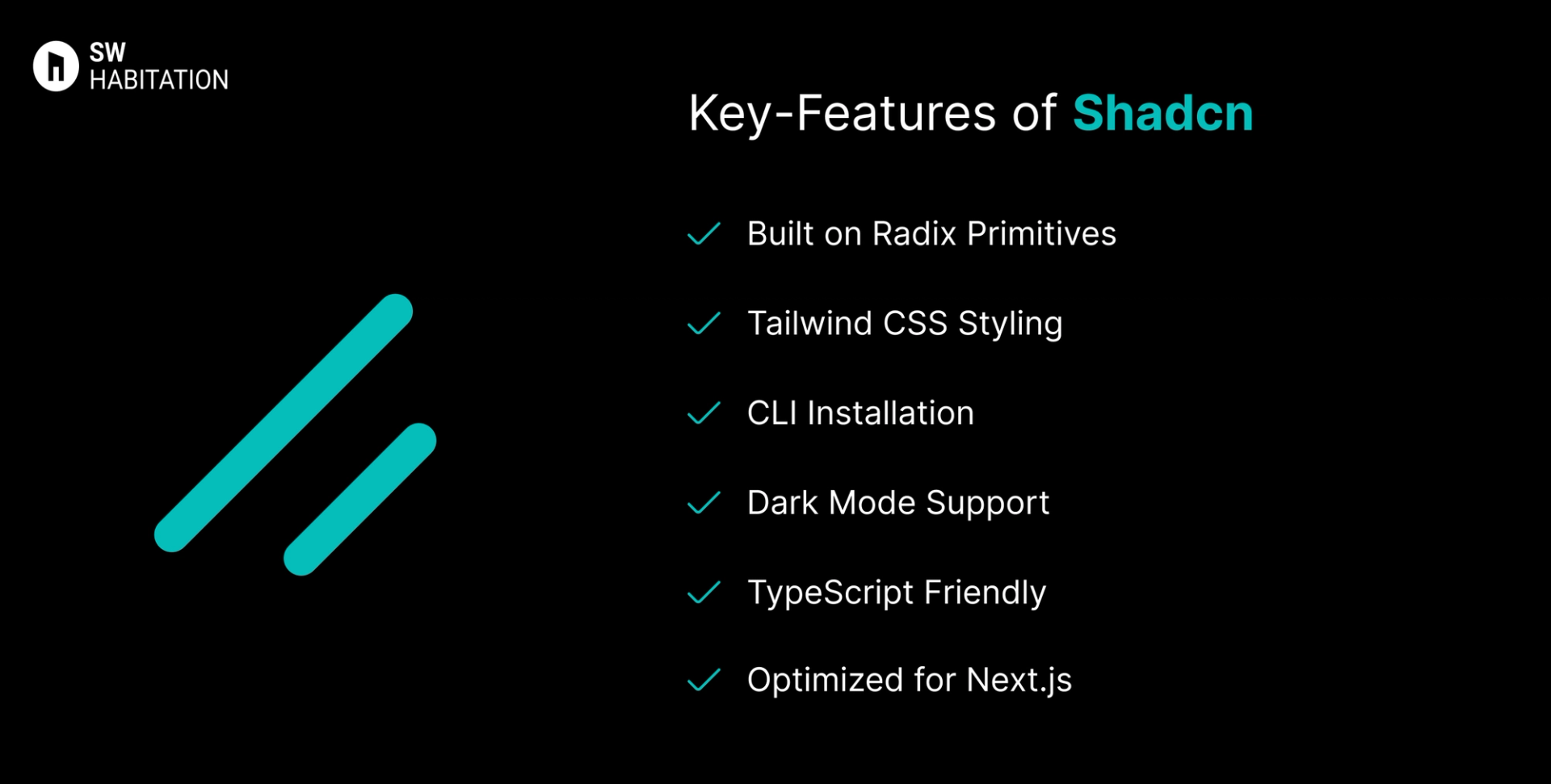
- Built on Radix Primitives: Accessibility and flexibility included.
- Tailwind CSS Styling: Easy customisation with utility-first approach.
- CLI Installation: Add only the components you need.
- Dark Mode Support: Pre-configured light and dark theme switching.
- TypeScript Friendly: Built entirely with TypeScript.
- Optimised for Next.js: Uses App Router structure and conventions.
Advantages of Shadcn UI
- Pre-styled and fast to use, ideal for building modern apps quickly.
- Easily theme-able using Tailwind and variants.
- Components are accessible by default.
- Ideal for SaaS apps, dashboards, and websites.
- Each component is editable because you own the code.
Disadvantages of Shadcn UI
- Requires Tailwind CSS, less suitable if you're not using Tailwind.
- Not suitable for other frameworks like Vue or Angular.
- Depends on Radix primitives, understanding Radix helps.
- Bundle size can grow if you install too many components.
- You need to manage components in your codebase manually.
What is Open Props?
Open Props is a modern CSS framework built entirely around CSS custom properties (variables). Instead of sending prebuilt UI components or heavy utility classes, it provides a set of reusable design tokens that you can apply anywhere. Think of it as a toolbox of modern CSS features rather than a ready-made UI kit.
It’s not a traditional framework like Bootstrap or Tailwind. Instead, it’s closer to a design system foundation—a library of variables for colors, typography, shadows, gradients, animations, spacing, and sizes. Developers can use these variables in raw CSS, Sass, or even combine them with other frameworks.
Because it’s framework-agnostic, Open Props works well with plain HTML, React, Vue, Angular, or even with utility-first libraries like Tailwind.
Key Features of Open Props
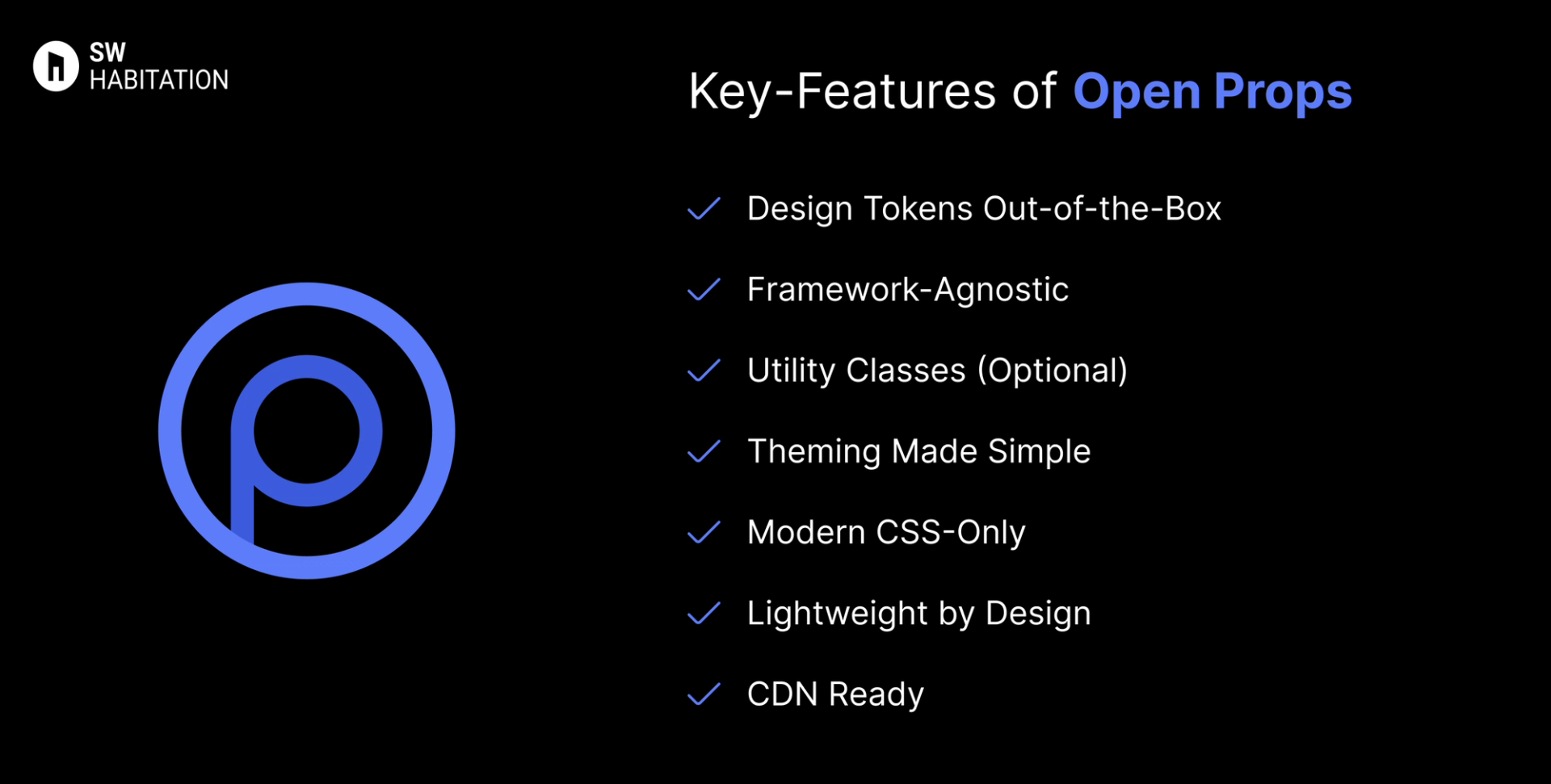
- Design Tokens Out-of-the-Box: Colors, gradients, fonts, shadows, borders, animations, spacing.
- Framework-Agnostic: Works with vanilla CSS, SCSS, PostCSS, Tailwind, or any frontend setup.
- Utility Classes (Optional): Comes with optional helpers like margin: var(--size-3).
- Theming Made Simple: Supports dark/light mode with just a few variable overrides.
- Modern CSS-Only: No JavaScript, only pure CSS properties.
- Lightweight by Design: Extremely small bundle size compared to component-heavy frameworks.
- CDN Ready: Drop in via a <link> or import with NPM.
Advantages of Open Props
- Flexible: Can be used standalone or alongside other CSS frameworks.
- Theming Support: Switch to dark mode or brand colors by redefining tokens.
- Beginner-Friendly: Easy for anyone who already knows CSS variables.
- Ultra Lightweight: Just variables, no unnecessary bloat.
- Encourages Best Practices: Pushes developers towards scalable, token-based design systems.
- Easy to Customize: Override props once to apply across your project.
Disadvantages of Open Props
- Small Community: Limited templates, examples, and resources compared to Bootstrap/Tailwind.
- Not Plug-and-Play: Great for design systems, but not ideal if you want instant UI.
- No Prebuilt Components: You’ll need to design buttons, modals, navbars yourself.
- Challenging Learning Curve for Beginners: Requires understanding of CSS variables and design tokens.
Comparison Between Shadcn UI vs Open Props
Use Cases of Shadcn UI
- Fast development for SaaS products and dashboards
- Admin panels, marketing websites, and eCommerce platforms
- React/Next.js projects with Tailwind CSS setup
- Projects requiring built-in light/dark theming
- Startups and devs who want pre-built UI with flexibility
Use Cases of Open Props
- Developers who want flexibility without being tied to Tailwind/Bootstrap.
- Building custom design systems from scratch.
- Lightweight personal projects or portfolios.
- Teams that want theming and scalability at the token level.
- Adding modern CSS tokens to legacy projects.
Other Resources
Conclusion
UI frameworks make building a polished website way easier. Whether you're working on something simple or a big project, they help you get things looking just right without having to stress over every little design decision. With ready-to-use components, responsive layouts, and modern styles, you can build faster and smarter.
So, pick one that works for you, and start creating a site that looks amazing from the get-go.
Frequently asked questions
What is Shadcn UI?
It’s a modern UI library built using Radix UI components, styled with Tailwind CSS, and ready for React apps.
Is Shadcn UI customizable?
Yes, heavily! It uses Tailwind for full styling control and supports variants.
Does Shadcn UI support dark mode?
Yes, via Tailwind’s dark mode and included config setup.
Is Shadcn UI production-ready?
Absolutely. It’s ideal for building sleek, modern, accessible UIs with minimal setup.
Does Shadcn UI work with other frameworks like Vue?
No, it’s built for React (especially Next.js) and not compatible with Vue or Angular.
Is Open Props a CSS framework like Bootstrap or Tailwind?
No, Open Props is not a framework. It’s a collection of CSS custom properties (design tokens).
Can I customize the values in Open Props?
Yes, Open Props variables can be overridden to fit your own design system.
Does Open Props make my CSS heavy?
No, Open Props is lightweight and you can import only the modules you need.
Does Open Props work with React, Vue, Next.js, etc.?
Yes, Open Props is framework-agnostic and works anywhere CSS works.
Is Open Props safe to use in production?
Yes, Open Props is stable, actively maintained, and widely used in real projects.